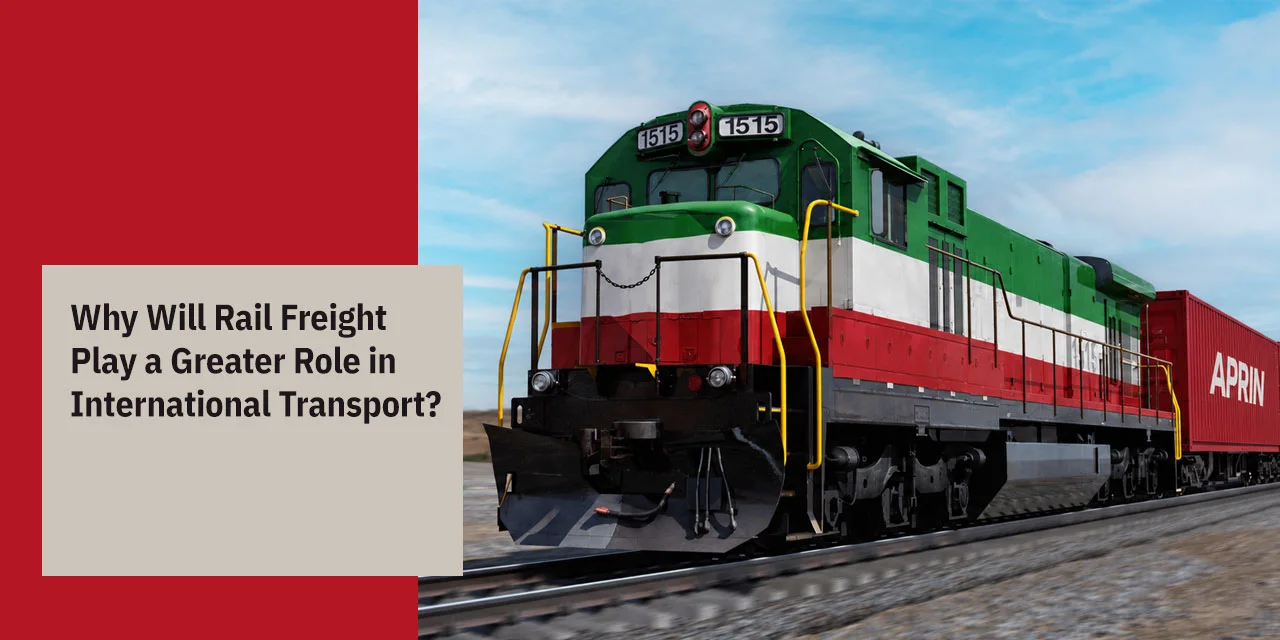
Rising logistics costs, disruptions along traditional trade routes, growing pressure to reduce carbon emissions, and the need for more reliable supply chains are increasing the importance of rail freight within international supply chains. On long-distance trade routes linking Asia, the Middle East and Europe via Central Asia, rail can offer a practical balance between the lower costs but longer transit times of sea freight and the speed but significantly higher costs of air freight.
The future of international logistics, however, is not about replacing road, sea, or air transport with rail. Instead, the industry is moving toward more integrated multimodal transport networks, with each mode used where it can deliver the greatest operational efficiency. Within this structure, rail freight can handle a growing share of high-volume, long-distance overland movements, while road transport connects cargo origins and final destinations with rail terminals and logistics hubs.
United Nations publications also highlight the importance of stronger rail connectivity across Asia in developing more efficient, sustainable, and resilient transport networks. UNESCAP identifies the development of international rail corridors and the Trans-Asian Railway network as important elements in improving regional connectivity and supply chain resilience.
Rail freight growth has varied across regions. Nevertheless, the development of Eurasian rail corridors demonstrates the potential for expansion in specific markets. Across the China–Europe Railway Express network, the annual number of trains increased by approximately 61% between 2020 and 2025, while container volumes grew by more than 80%. These five-year figures illustrate the growing scale of rail freight services across the wider Eurasian network, although traffic growth has not been consistent from year to year.
The economic advantages of rail freight are most evident when cargo volumes are high, distances are long and freight flows are consistent. A single freight train can move a large number of containers or substantial volumes of bulk and industrial cargo in a single journey, helping to distribute operating costs across larger cargo volumes.
Research by the OECD points to the cost advantages rail can achieve over longer distances and with larger, more consistent freight volumes. Under these conditions, block train services can make better use of train capacity and help reduce transport costs per unit of cargo.
However, comparisons should not be based on the freight rate alone. For importers and exporters, a more useful measure is Total Logistics Cost (TLC), including transport, terminal handling, warehousing, inventory carrying costs, delay-related costs, customs formalities and final delivery.
For example, where rail reduces long-distance road movements, limits intermediate cargo handling and improves time to market, its economic benefits may extend beyond differences in freight rates.
At the same time, rail freight is not always the lowest-cost option. Border-related costs, rail freight charges, bogie exchange or cargo transfers at breaks of gauge, transshipment and terminal efficiency can all affect the total cost. The economic case for rail should therefore be assessed by route, cargo type and operating conditions.
A key advantage of rail freight on intercontinental routes is its competitive transit time. On many Eurasian trade routes, rail can offer shorter transit times than sea freight without the substantially higher costs of air freight. On some Eurasian corridors, overland rail connections between Asia and Europe can offer transit times of around half those of comparable sea routes.
This advantage is particularly important for shipments where delivery times directly affect inventory levels, production schedules or speed to market, including industrial components, automotive parts, machinery, electronic equipment, and a wide range of containerised goods.
For example, on the China–Iran route, rail freight from Xi’an to APRIN can take around 25 to 40 days, depending on geopolitical developments and operating conditions. After crossing Central Asia, cargo can enter Iran’s national rail network and continue directly to APRIN, near Tehran, providing access to major distribution centres and consumer markets in and around Tehran.
The benefits of rail extend beyond shorter transit times. More predictable delivery schedules can help businesses plan procurement and production more accurately, reduce inventory in transit and lower buffer stock requirements. These improvements can reduce inventory carrying costs and support more effective supply chain planning.
Reducing carbon emissions has become an increasingly important consideration in transport planning and supply chain management. In this context, rail freight can offer lower energy consumption and greenhouse gas emissions per tonne-kilometre than road freight, particularly on high-volume routes. On long-distance routes and for high-volume cargo flows, shifting suitable cargo volumes from road to rail can reduce fuel use and greenhouse gas emissions.
The environmental benefits of rail become more significant when trains operate with high load factors, sufficient freight volumes and regular schedules. Electrified rail networks can further reduce dependence on fossil fuels, particularly where electricity is generated from lower-carbon energy sources.
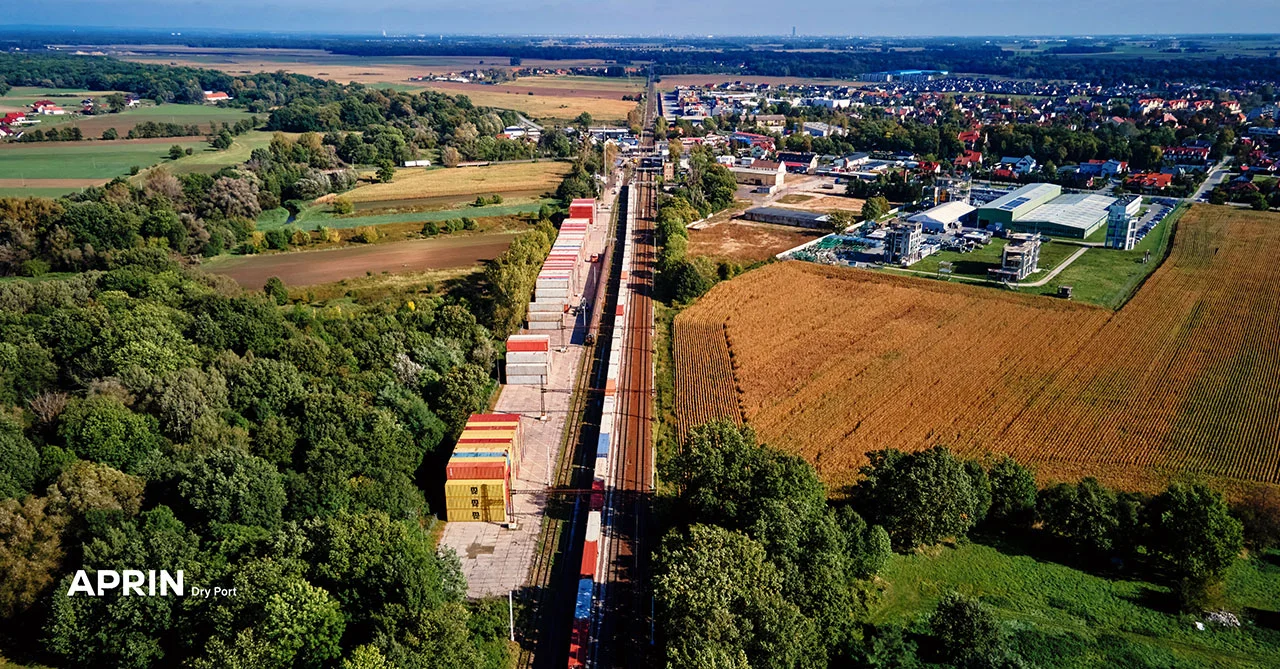
For this reason, many sustainable transport strategies encourage a shift from road to rail freight. This approach, known as modal shift, uses rail freight for the main long-distance leg of the journey while road transport provides first-mile movements, inland distribution and final delivery.
Across Eurasian trade corridors, the expansion of rail freight can also support the development of lower-carbon multimodal transport networks while increasing freight capacity. Within these networks, Dry Ports and logistics hubs such as APRIN Dry Port link rail services with road networks and seaports, supported by customs services, warehousing and inland distribution. These connections help integrate rail into wider supply chains.
Cargo security in international transport involves more than preventing theft. Operational safety, cargo control, traceability, handling frequency and handovers can all influence the overall risk profile of a logistics chain.
On many routes, rail freight moves large volumes through scheduled train services, sealed containers and designated terminals. When this operating structure is supported by cargo tracking, digital information exchange, customs controls, and integrated terminal management, it can provide greater visibility and control over cargo flows.
In the European Union, rail safety and technical interoperability are supported by common standards and regulatory frameworks designed to improve the safety and consistency of railway operations.
In international rail freight, the wider adoption of electronic documentation, data exchange between customs authorities and rail operators, and more standardised cross-border procedures can further improve cargo traceability, operational visibility and control throughout the transport chain.
One of the key lessons of recent years is that excessive reliance on a single route or transport mode can leave supply chains more exposed to disruption. Port congestion, interruptions along maritime routes, temporary border closures, capacity constraints, geopolitical tensions, and sudden changes in freight costs can all affect the flow of goods. In this context, greater access to rail services can support route diversification.
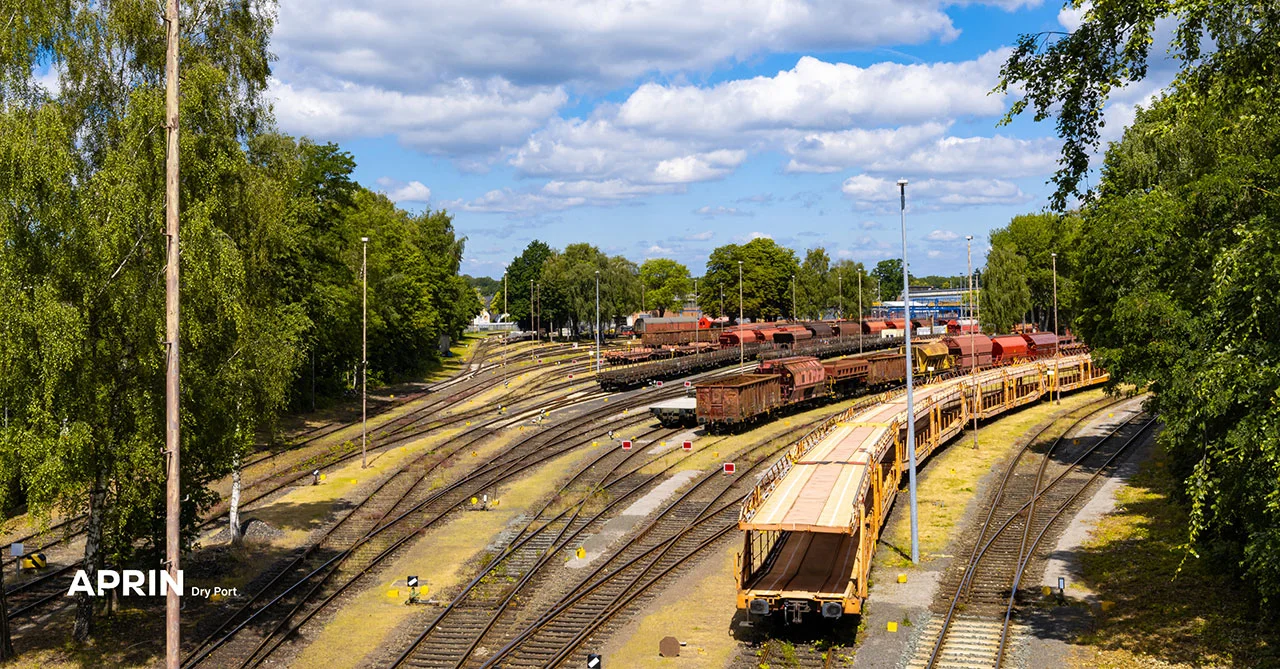
When a company has access to an operational rail corridor in addition to sea or road transport, it can consider alternative routes when disruption affects established services. Access to alternative routes is an important element of supply chain resilience. It can reduce dependence on a single corridor or transport mode and improve network flexibility, although rail corridors remain subject to their own operational and geopolitical risks.
| Criteria | Rail Freight | Sea Freight | Road Freight | Air Freight |
|---|---|---|---|---|
| Cost for high-volume, long-distance freight | Competitive | Generally low | Typically increases with distance | Very high |
| Transit time | Competitive on suitable corridors | Longer | Competitive on regional routes | Very fast |
| Freight capacity | High | Very high | More limited | Limited |
| Carbon emissions intensity | Low | Low to moderate | Generally higher than rail | Very high |
| Door-to-door flexibility | Often requires road connections | Requires inland transport connections | Very high | Requires inland transport connections |
| Best suited for | High-volume, long-distance, containerised and industrial cargo | Very high cargo volumes and less time-sensitive shipments | Regional distribution, first-mile, and final delivery | High-value, time-critical cargo |
Indicative comparison only. Actual costs, transit times and emissions intensity depend on the route, cargo, equipment and operating conditions. Carbon emissions intensity refers to emissions per tonne-kilometre.
This comparison shows that the main advantage of rail freight lies in its ability to balance several operational priorities. Rail may not be less expensive than sea freight or faster than air freight, but on many international routes it can provide a practical balance between cost, transit time, capacity, sustainability and reliability.
International freight is likely to depend increasingly on multimodal transport networks in which rail freight plays a stronger role. Sea freight will remain essential to global trade and the movement of very large cargo volumes. Road transport will remain essential for first-mile transport, inland distribution and final delivery, while air freight will remain critical for certain highly time-sensitive cargo.
On long-distance overland corridors, however, rail freight can handle the main long-haul overland leg, with Dry Ports and multimodal terminals linking rail services to road networks, seaports, and production centres and consumer markets.
Across Eurasia, routes such as China–Central Asia–Iran, rail connections linking Russia and Central Asian countries with Iran, and the various branches of the International North–South Transport Corridor (INSTC) illustrate how rail can support long-distance freight movements. Border terminals, seaports and Dry Ports provide the connections needed to integrate these rail services with other transport modes.
In Iran, international rail freight can deliver greater value when the national railway network is connected to logistics hubs, customs facilities, warehousing, container terminals, and inland distribution networks. This is a key function of a Dry Port within an integrated transport network.
APRIN Dry Port, an Integrated Logistics Hub located southwest of Tehran, is directly connected to Iran’s national railway network. Its location connects international rail services with Tehran and major industrial, commercial and consumer markets in central Iran.
The launch of rail services between China and APRIN, together with scheduled freight trains arriving from Russia, demonstrates that these rail connections are operational, rather than simply planned infrastructure. The first scheduled freight train from Russia carried 62 forty-foot containers via Kazakhstan and Turkmenistan, entering Iran through the Incheh Borun border crossing before continuing to APRIN Dry Port. A two-way rail service between Iran and China had also been launched, creating opportunities for more regular freight movements between Iran and markets across Asia and Eurasia.
By integrating rail and road transport, container handling, customs services, warehousing, Empty Container Depot (ECD) services, cargo consolidation and deconsolidation, and inland distribution at one location, APRIN connects international rail services with onward transport and domestic distribution.
No single mode will define the future of international transport. Rail is becoming more important because it can balance cost, transit time, sustainability, security, and risk management.
For high-volume cargo, consistent freight flows and long-distance overland routes, rail freight can reduce reliance on long-distance road transport, shorten transit times compared with some maritime routes, and provide additional routing options that strengthen supply chain resilience.
As Eurasian rail corridors develop, border and customs processes become more digitalised, and Integrated Logistics Hubs such as APRIN Dry Port expand their role, rail freight can play a larger role in trade linking Iran with China, Russia, Central Asia and other regional and international markets. Its strategic value lies not in replacing other modes, but in serving as a core part of the long-haul overland network within international multimodal transport systems.



 English