APRIN Dry Port delivers end-to-end import logistics solutions that seamlessly connect international gateways with inland markets across Iran. From cargo arrival at seaports, rail terminals, or land borders to customs clearance, container handling, warehousing, and nationwide distribution, APRIN provides an integrated logistics environment that simplifies import operations, improves supply chain visibility, and accelerates the movement of cargo to its final destination.
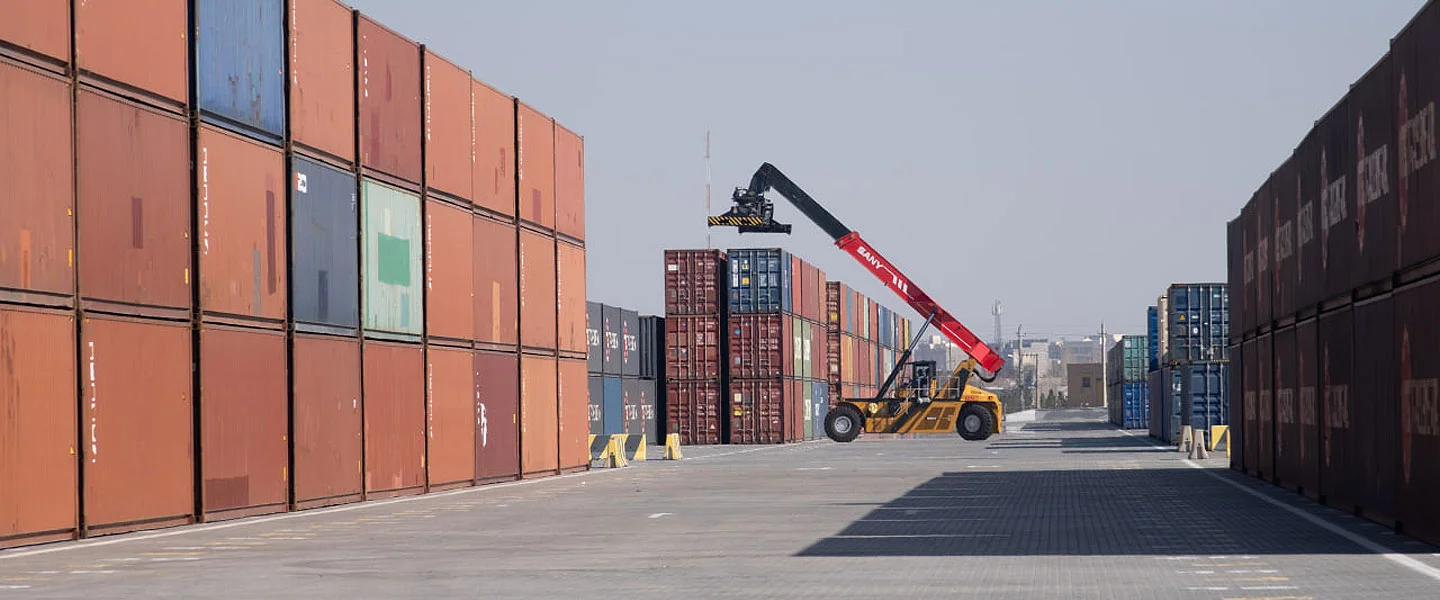
APRIN Dry Port provides integrated import logistics solutions that connect international cargo gateways with Tehran and markets across Iran. As a leading logistics hub in a strategic location near Tehran, APRIN combines multimodal transportation, customs services, container operations, warehousing, cold-chain infrastructure, and inland distribution within one coordinated logistics environment.
With direct access to Iran’s national rail and road networks and efficient connections to southern and northern seaports, APRIN supports the movement of imported cargo from the point of entry to customs processing, storage, and onward distribution. This integrated approach helps importers simplify logistics coordination, reduce unnecessary cargo movements, and maintain greater control over inbound supply chains.
Imported cargo often passes through multiple terminals, customs facilities, transport providers, and warehouses before reaching its final market. APRIN brings these activities closer together by providing a single inland location where cargo can be received, handled, inspected, stored, cleared, and prepared for distribution.
Containerized and general cargo, industrial equipment, automotive components & parts, food products, pharmaceuticals, refrigerated cargo, and other inbound shipments can be managed according to their specific operational and storage requirements. By integrating transport, customs, handling, and warehousing, APRIN creates a more coordinated gateway-to-market process for importers, manufacturers, distributors, freight forwarders, and logistics providers.
APRIN receives imported cargo through an integrated network of rail, sea-linked, and road routes, connecting major international origins and border gateways with Tehran and the wider Iranian market.
Cargo originating from Xi’an and other manufacturing centres in China can move through Central Asia, enter Iran’s railway network, and continue directly to APRIN. The Xi’an–APRIN corridor can reduce rail transit time to approximately 14-20 days, providing an efficient option for machinery, industrial components, automotive parts, electronics, consumer goods, and other containerized cargo.
Imports from Russia, Belarus, Kazakhstan, Turkmenistan, Uzbekistan, and other Eurasian markets can reach Iran through regional rail networks and northern rail gateways, including Incheh Borun and Sarakhs, before continuing toward APRIN. Cargo from Türkiye and European markets can also connect to Iran’s railway network through the Razi–Kapıköy rail gateway. These connections position APRIN within major Eurasian trade routes, including the International North–South Transport Corridor (INSTC), TRACECA, the Southern Silk Road, and ECO Corridors.
International road freight can reach APRIN from Türkiye, Iraq, Afghanistan, Pakistan, Turkmenistan, Azerbaijan, Armenia, and other neighbouring markets through Iran’s border crossings and national highway network Carnet-TIR. These routes provide flexibility for full-truckload, less-than-truckload, containerized, industrial, and time-sensitive imports.
Once cargo arrives at APRIN, it can be transferred to customs-controlled areas, container yards, warehouses, or onward transportation services. The integration of road and rail infrastructure also enables cargo to move between trucks and rail wagons according to shipment requirements, destination, and delivery schedule.
International cargo originating from East Asia, South Asia, India, the Persian Gulf, Europe, and other global markets can enter Iran through Shahid Rajaee Port in Bandar Abbas. Following vessel discharge, containers can be transferred inland by rail or road to APRIN, where customs processing, cargo handling, storage, and distribution can be completed closer to Tehran,while savig costs for our valuabale customers by approximatly forty percent in compare to Land transit by truck.
The direct rail connection between Bandar Abbas and APRIN enables cargo to reach ADP in as little as 48 hours. Moving containers inland helps reduce long-distance road transport, limits unnecessary port dwell time, and relocates key logistics activities closer to the cargo’s final market.
APRIN is also connected to Iran’s northern transport network and Caspian Sea ports. Cargo originating from Russia, Kazakhstan, Turkmenistan, Azerbaijan, and other Caspian markets can enter through northern ports and continue to APRIN through the national rail or road network.
APRIN provides the principal services required to manage imported cargo within a single logistics hub. These include:
The presence of an on-site Customs Office allows imported cargo to be inspected, documented, stored, and cleared directly within the facility. Cargo awaiting customs procedures can remain in designated bonded or customs-controlled areas, reducing the need for transfers between separate terminals, warehouses, and clearance locations.
APRIN’s operational infrastructure includes dedicated rail tracks, container-handling areas, warehousing facilities, temperature-controlled storage, and 120 reefer plugs. With an annual inbound capacity of 200,000 TEU, the facility is equipped to support regular container flows, block-train operations, and scalable import logistics requirements.
APRIN’s location southwest of Tehran places imported cargo close to Iran’s largest concentration of manufacturers, distributors, retailers, industrial zones, and consumers. After customs clearance, shipments can be dispatched by rail or road to Tehran, Karaj, Isfahan, Mashhad, Tabriz, Shiraz, Ahvaz, and other commercial and industrial centres.
Importers can also use APRIN as an inland inventory and distribution point. Cargo can be stored closer to the market and released according to production schedules, customer orders, seasonal demand, or regional distribution plans. This approach provides greater inventory flexibility and reduces repeated movements from distant ports and border gateways.
By coordinating customs clearance, storage, transport, and distribution from one strategic location, APRIN enables a more efficient transition from international arrival to domestic delivery.
APRIN Dry Port connects international rail corridors, seaports, border gateways, and domestic transportation networks through one integrated logistics hub. Its combination of multimodal connectivity, on-site customs services, container handling, warehousing, cold-chain facilities, and nationwide distribution provides importers with a coordinated route from the gateway of entry to the final market.
This integrated operating model helps reduce supply chain fragmentation, improve cargo security, shorten inland transit times, and create more predictable import operations. For businesses importing cargo into Tehran and markets across Iran, APRIN provides a reliable and scalable logistics solution connecting global trade routes with the country’s rail, road, customs, storage, and distribution networks.
Find answers to your questions about our services
We're here to help you!
APRIN supports end-to-end import logistics, including cargo handling, customs clearance, bonded storage, warehousing, cold-chain services, multimodal transport, and inland distribution across Iran.
Cargo can reach APRIN from China, Russia, Central Asia, Türkiye, Europe, India, the Gulf region, and neighboring countries through connected rail, sea, and road routes.
Containers arriving at Shahid Rajaee Port and other Iranian ports can be transported to APRIN by rail or road for customs processing, storage, handling, and final distribution.
Cargo from Türkiye can reach APRIN by rail through the Türkiye–Iran railway connection and the Razi–Kapıköy border crossing. Road freight from Iraq, Afghanistan, Pakistan, Turkmenistan, Azerbaijan, Armenia, and other neighboring markets can reach APRIN through Iran’s land border crossings and national highway network.
Yes. Cargo from Xi’an and other Chinese logistics centers can travel through Central Asia and Iran’s railway network directly to APRIN near Tehran.
Yes. Rail cargo from Russia, Kazakhstan, Uzbekistan, Turkmenistan, and other Eurasian markets can enter Iran through northern rail gateways such as Incheh Borun and Sarakhs before continuing to APRIN.



 English