APRIN Dry Port (ADP) supports agriculture and food supply chains through advanced cold chain infrastructure, including 2,600 sqm of cold storage, 8 cool rooms operating between -25°C and +4°C, and 120 reefer container plugs. Combined with rail transportation, customs services, warehousing, and nationwide distribution networks, ADP enables efficient movement of agricultural products and food commodities across Iran and international markets.
Maintaining the freshness, quality, and safety of food products depends on time, temperature, and precise supply chain coordination. Transportation delays, extended customs procedures, or disruptions in storage conditions can shorten product shelf life, increase waste, and limit timely access to market.
Aprin Dry Port, an Integrated Logistics Hub located near Tehran, supports the import, export, storage, and distribution of agricultural and food products. Its cold chain infrastructure, rail and road connectivity, on-site customs services, and direct access to Iran’s largest consumer market provide the capabilities required for the planned movement of products from origin to market.
Agriculture and food supply chains must be fast, flexible, and controlled. Aprin helps producers, importers, exporters, food manufacturers, and distribution networks coordinate product arrival, storage, and delivery with harvest seasons, production schedules, and changing market demand.
Aprin’s strategic location southwest of Tehran enables faster access to food processing facilities, wholesalers, retailers, regional cold stores, and major consumer markets.
Fresh products require short transit times and suitable storage conditions. APRIN’s cold storage facilities and access to distribution networks support temporary storage and faster movement of these products to domestic markets or export routes.
Frozen foods, dairy products, protein-based products, and other temperature-sensitive goods require an uninterrupted cold chain. APRIN’s temperature-controlled infrastructure enables cargo to be stored under conditions appropriate to the requirements of each product.
Grains, rice, pulses, agricultural inputs, and other dry commodities are often transported in large volumes. APRIN’s connection to Iran’s national transport network facilitates their movement to processing facilities, distribution warehouses, and consumer markets.
Production inputs, semi-processed goods, and packed food products must be aligned with manufacturing schedules and market demand. Temporary storage and phased delivery help food companies improve inventory control and avoid unnecessary stock accumulation.
Aprin Dry Port provides dedicated cold chain infrastructure comprising approximately 2,600 sqm of cold storage space, 8 temperature-controlled cold rooms operating between -25°C and +4°C, and 120 reefer container plugs.
This capacity supports refrigerated containers and temperature-sensitive cargo between arrival, regulatory processing, and onward transportation. Concentrating cold storage capabilities within one logistics hub reduces unnecessary cargo movements and helps preserve product quality.
The presence of an on-site Customs Office enables import and export cargo to be inspected, assessed, and cleared directly within APRIN. For agricultural and food products, where time and storage conditions are critical, completing customs procedures close to the cold storage and cargo handling areas helps avoid unnecessary transfers and extended cargo dwell times.
Aprin also facilitates coordination for document review, product sampling, and specialized testing at laboratories approved by the relevant authorities. Depending on the product, the process may include obtaining health certificates, phytosanitary and quarantine certificates, standards compliance certificates, permits from the Iran Food and Drug Administration, and other required regulatory approvals.
Aprin’s rail connection with Bandar Abbas facilitates the movement of imported food products and food-industry inputs from Iran’s principal container gateway to the Tehran market. Following customs clearance or temporary storage, cargo can be transported by rail and road to production facilities, processing centers, and consumer markets across the country.
Access to the national railway network and regional trade routes also provides the connectivity required to support the export and transit of agricultural and food products.
By combining cold chain infrastructure, customs services, rail connectivity, and a strategic location near Tehran, Aprin Dry Port provides an efficient environment for managing fresh, frozen, and dry products, as well as food-industry raw materials.
The most suitable logistics solution for each shipment is determined by the product type, temperature requirements, volume, origin, destination, and applicable regulations. APRIN’s team is ready to assess the needs of producers, importers, exporters, and food companies and provide an appropriate solution for cargo arrival, storage, and distribution.
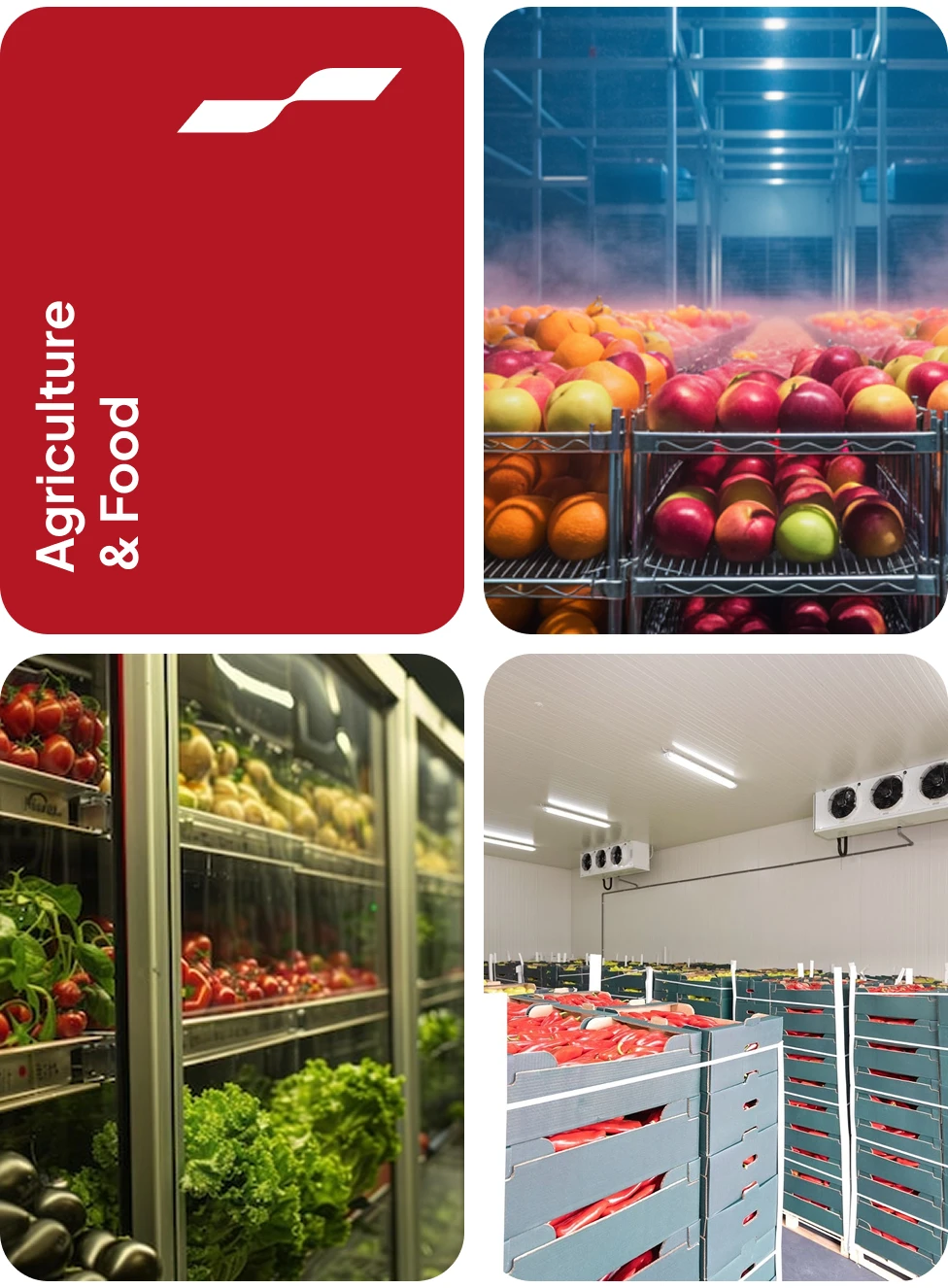

Reliable temperature-controlled transportation solutions that protect product quality and ensure compliance throughout the journey.

Advanced cold storage infrastructure designed to preserve freshness, extend shelf life, and maintain product integrity.

Integrated cold chain solutions that connect producers to high-growth markets, ensuring fresh products reach consumers efficiently and in optimal condition.
Find answers to your questions about our services
We're here to help you!
ADP provides cold storage, rail transportation, customs clearance, warehousing, and nationwide distribution services for agricultural products, food commodities, and processed foods.
APRIN offers approximately 2,600 sqm of cold storage capacity, 8 temperature-controlled cool rooms, and 120 reefer container plugs to support temperature-sensitive food and agricultural products.
Yes. ADP’s cold chain infrastructure is designed to support fresh produce, fruits, vegetables, dairy products, frozen foods, and other temperature-sensitive agricultural cargo.
Yes. APRIN offers dry warehousing facilities suitable for grains, packaged foods, food ingredients, agricultural commodities, and other non-perishable products.
Rail transportation provides a cost-effective and reliable solution for moving large volumes of agricultural and food products between production regions, ports, distribution centers, and consumer markets.
Yes. APRIN’s on-site Customs Office enables import and export cargo to be processed and cleared directly within the dry port, helping reduce clearance times and improve operational efficiency.
Yes. ADP provides transportation, customs, warehousing, and logistics services that support agricultural exporters in accessing regional and international markets.



 English