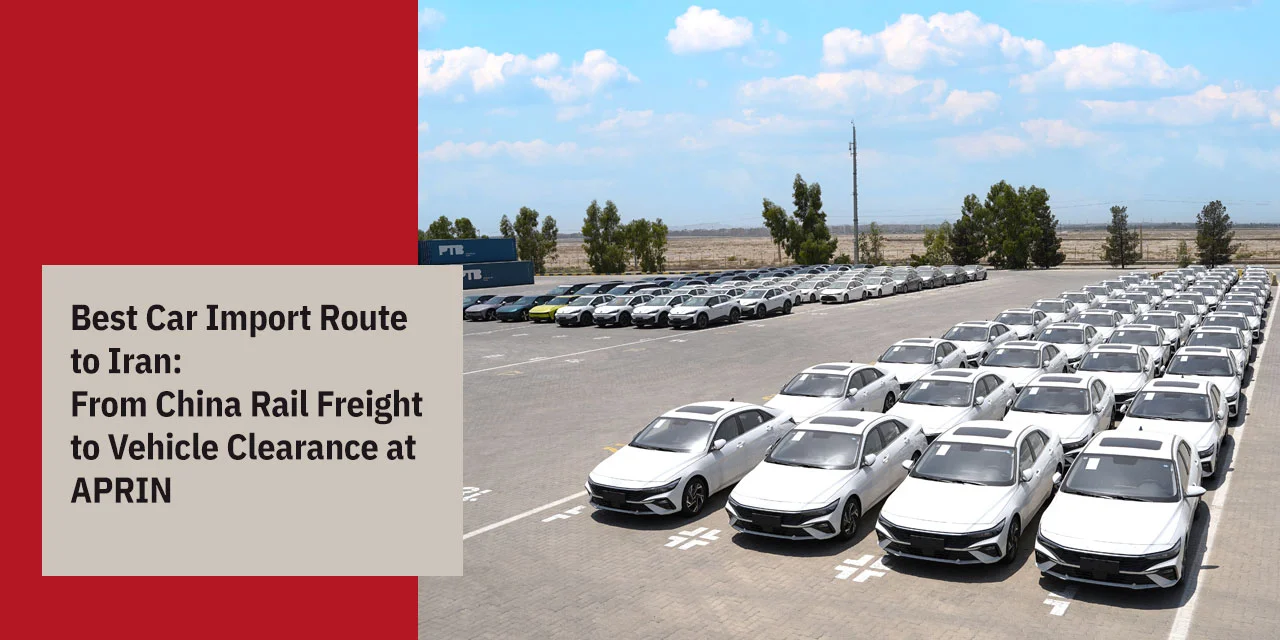
Importing vehicles into Iran involves far more than purchasing vehicles in the country of origin and transporting them to the Iranian border. The choice of transport route, mode of vehicle transportation, port or border gateway, customs clearance location, vehicle storage after arrival, and onward distribution all have a direct impact on the time, cost, and overall efficiency of the vehicle import process.
As vehicle imports into Iran continue to grow, selecting the right logistics route has become increasingly important. According to figures announced by the Head of the Islamic Republic of Iran Customs Administration (IRICA), approximately 67,000 vehicles were cleared through Iranian customs during the Iranian year 1404 (March 2025–March 2026), while around 11,000 vehicles were cleared during the first two months of 1405 (March–May 2026). This growth is increasing demand for specialized infrastructure for vehicle transportation, customs clearance, storage, handling, and distribution.
Against this backdrop, there is no single answer to the question: “What is the best car import route to Iran?” Vehicles may be sourced from China, the UAE, Türkiye, Europe, or other international markets, and each origin may require a different combination of rail, sea, road, and multimodal transportation.
In this logistics network, APRIN Dry Port serves as a strategic inland logistics gateway connecting international vehicle import routes with Tehran and Iran’s central automotive market. With an on-site Customs Office and Specialized Automotive Logistics Infrastructure, APRIN provides an integrated environment for vehicle handling, storage, customs procedures, preparation, and distribution. APRIN’s designation as an authorized customs clearance location for imported vehicles has further strengthened its role in Iran’s automotive import supply chain.
In international vehicle logistics, the shortest geographical route is not necessarily the most efficient logistics route. Importers should evaluate the Total Logistics Cost, taking into account not only international freight rates but also port or border dwell time, loading and unloading costs, inland transportation, warehousing, customs procedures, and final vehicle delivery.
The country of origin and transportation model therefore play a decisive role:
| Vehicle Origin | Main Route | Transport Mode | APRIN Access |
|---|---|---|---|
| China | China → Kazakhstan → Turkmenistan → Incheh Borun → APRIN | Containerized Rail Freight | Direct via the rail network |
| China & East Asia | Port of Origin → Shahid Rajaee Port → APRIN | Sea + Rail / Road | Inland transfer from Bandar Abbas |
| UAE | UAE Ports → Southern Iranian Ports → APRIN | Sea + Inland Transport | Rail or Road |
| Türkiye & Europe | Europe → Türkiye → Bazargan → APRIN | Car Carrier / Road Transport | Road Network |
| Central Asia | Eastern / Northeastern Borders → APRIN | Rail or Car Carrier | Sarakhs / Incheh Borun |
The most suitable route ultimately depends on the number of vehicles, purchase location, vehicle type, required transit time, containerization requirements, train or vessel schedules, and the final destination of the vehicles in Iran.
Car imports from China have become an increasingly important part of Iran’s automotive logistics market. At the same time, the continued development of rail connectivity between China and Iran has created new opportunities for international vehicle transportation.
One of the key rail routes for containerized vehicle transportation from China to Iran is:
China | China → Kazakhstan → Turkmenistan → Incheh Borun → APRIN | Containerized Rail Freight | Direct Rail Connection
This route forms part of the China–Central Asia–Iran rail corridor and the Southern Silk Road. Operational China–Iran freight services have demonstrated the viability of this corridor for containerized transportation, with rail transit from China to APRIN typically taking approximately 14–20 days. The continued expansion of container rail services between China and Iran has made this corridor an increasingly reliable and commercially attractive option for international freight.
Under the Containerized Vehicle Transportation model, vehicles are loaded into containers and secured using specialized lashing systems. Proper lashing helps restrict vehicle movement during rail transit and terminal handling, reducing the risk of damage throughout the journey.
For importers whose primary market is Tehran or central Iran, this model offers an important advantage: once the container enters Iran through the Incheh Borun rail border, it can continue directly through the national railway network to APRIN Dry Port.
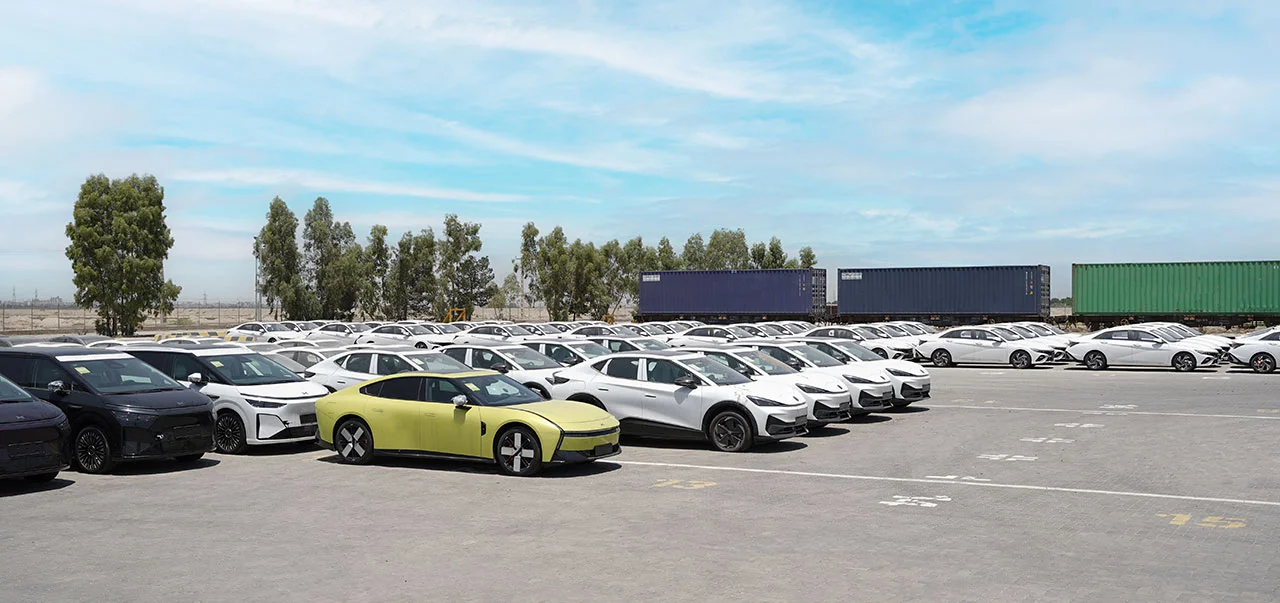
As a result, rail transportation of vehicles from China to APRIN can reduce intermediate cargo movements and consolidate key downstream activities—including vehicle receiving, customs procedures, storage, inspection, and preparation—within a strategically located inland logistics hub close to Iran’s largest automotive market.
Sea freight remains one of the main transportation options for vehicles imported from China, Japan, South Korea, the UAE, and other international automotive markets.
Under this model, the logistics route can be structured as:
Port of Origin → Shahid Rajaee Port → Inland Transportation → APRIN Dry Port → Customs Clearance, Storage & Vehicle Distribution
The key advantage of this model is the ability to transfer part of the logistics process from the seaport to an inland logistics hub located closer to Iran’s main distribution and consumer markets. In this structure, Shahid Rajaee Port serves as the maritime gateway, while vehicles can then be transferred to APRIN for onward customs, storage, preparation, and distribution activities.
This model has become particularly relevant since APRIN was designated as an authorized customs clearance location for imported vehicles. Plans to transfer several thousand imported vehicles from Shahid Rajaee Port to APRIN Dry Port also demonstrate the potential of this model to reduce vehicle congestion at southern seaports and shift selected logistics operations inland.
This route can be particularly valuable for importers whose vehicles are ultimately destined for Tehran, Alborz, major distribution centers, and central Iranian consumer markets.
For vehicles originating in Türkiye or European markets, road transportation using dedicated car carrier trailers can provide an effective logistics solution.
Vehicles can be transported along the following route:
Europe → Türkiye → Bazargan Border → Iran Road Network → APRIN
A major advantage of Car Carrier Transportation is that vehicles do not need to be containerized. Multiple vehicles can be transported on dedicated car carrier trailers and moved directly to an inland storage or logistics facility after entering Iran.
Within APRIN’s automotive logistics operations, the Bazargan and Sarakhs border crossings are among the key road gateways used for vehicles transported by car carrier.
The United Arab Emirates, particularly Dubai, is an important regional hub for vehicle trading and re-export. Vehicles purchased through the UAE can therefore be transported to Iran through the following route:
UAE Ports → Southern Iranian Ports → Transfer to APRIN
Under this model, the international leg is completed by sea, while onward transportation within Iran can be handled by rail or road. When deciding between customs clearance at the seaport and transferring vehicles to an inland dry port, importers should compare port dwell costs, customs clearance time, inland transportation costs, customer locations, and vehicle distribution requirements.
APRIN’s role extends well beyond simply serving as the final transportation destination.
Once imported vehicles arrive in Iran, a number of logistics activities are still required, including vehicle receiving, unloading, storage, inspection, customs procedures, preparation, and final delivery. Consolidating these activities within a single logistics hub can reduce unnecessary transfers and simplify the overall automotive logistics process.
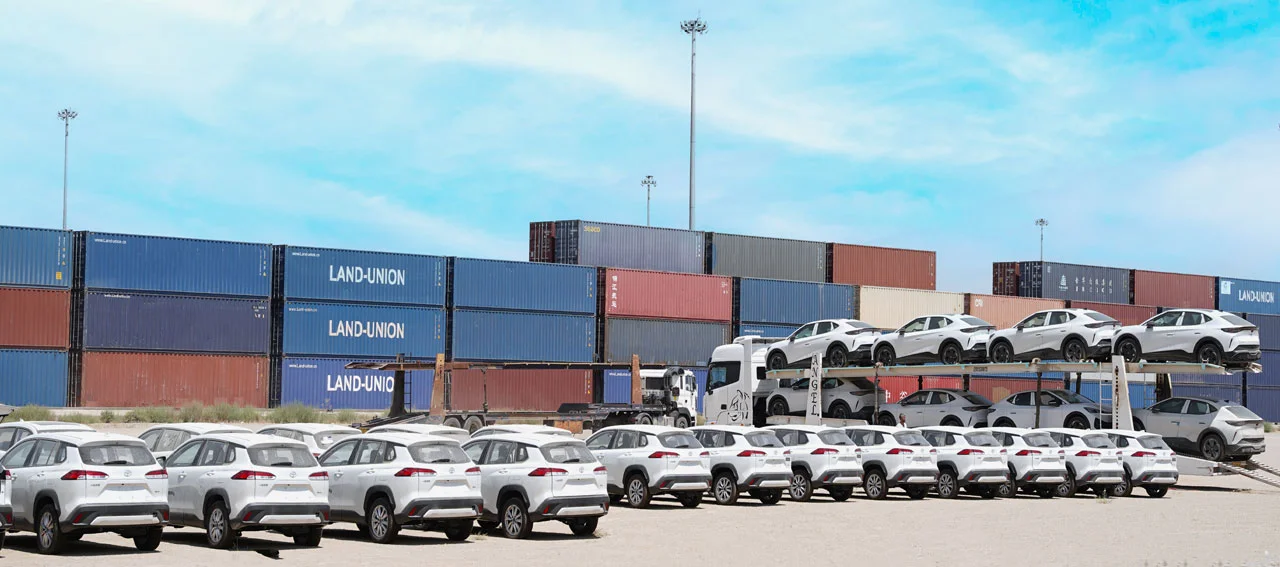
As an authorized customs clearance location for imported vehicles, APRIN enables selected vehicle customs procedures to be completed within the dry port. At the same time, APRIN’s proximity to Tehran and its access to both rail and road transportation networks make it a strategically positioned automotive logistics hub for companies serving Tehran and central Iran.
APRIN’s specialized automotive logistics services are designed to support vehicles throughout the process from arrival to final delivery.
One of the key facilities is a dedicated vehicle storage area with capacity for more than 1,000 vehicles. APRIN’s automotive logistics services include:
This integrated operating model means that vehicles arriving at APRIN are not simply parked in a storage yard. Instead, multiple stages of the automotive logistics process can be coordinated within a single logistics environment.
Incoming vehicles are unloaded from containers or car carriers using processes appropriate to the transportation mode and prepared for subsequent logistics activities. Proper handling is particularly important for new and high-value vehicles, helping reduce the risk of damage during unloading and internal movement.
APRIN’s dedicated storage capacity for more than 1,000 vehicles enables importers and automotive companies to better coordinate customs clearance, vehicle preparation, and phased distribution.
Following arrival, vehicles may require visual condition checks, preliminary inspections, and other preparation activities before delivery. Completing these processes within the same logistics facility can reduce unnecessary vehicle transfers between different locations.
Once customs procedures and vehicle preparation have been completed, vehicles can be prepared for onward transportation to dealerships, distribution centers, automotive companies, or corporate customers.
Neither transport model is universally better across every route.
Containerized vehicle transport offers particular advantages along the China–Central Asia–Iran corridor, as it enables vehicles to move through the international rail network while remaining secured inside containers. This can be particularly valuable for higher-value vehicles or shipments where greater physical protection is required.
By comparison, Car Carrier Transportation can be more practical for land routes such as Türkiye–Bazargan and selected Central Asian corridors. In this model, several vehicles are transported on a dedicated car carrier trailer without requiring containerization.
The most appropriate solution should therefore be selected based on the country of origin, number of vehicles, cargo value, transportation cost, required transit time, and infrastructure available along the route. This is where effective transport network design becomes more important than simply comparing freight rates.
APRIN’s key advantage lies in the integration of multiple stages of the vehicle import supply chain.
For vehicles arriving from China, containerized shipments can enter Iran via the China–Central Asia–Incheh Borun rail corridor and continue to APRIN through the national railway network. For vehicles arriving by sea, direct rail connectivity between Shahid Rajaee Port and APRIN enables selected inland logistics activities to be shifted away from the seaport. Vehicles arriving from Türkiye and Europe can also access APRIN by road through the Bazargan corridor.
In addition, APRIN combines an authorized vehicle customs clearance facility, dedicated vehicle storage, inspection and preparation services, and integrated rail and road infrastructure. This enables the logistics process to continue efficiently after vehicles enter Iran.
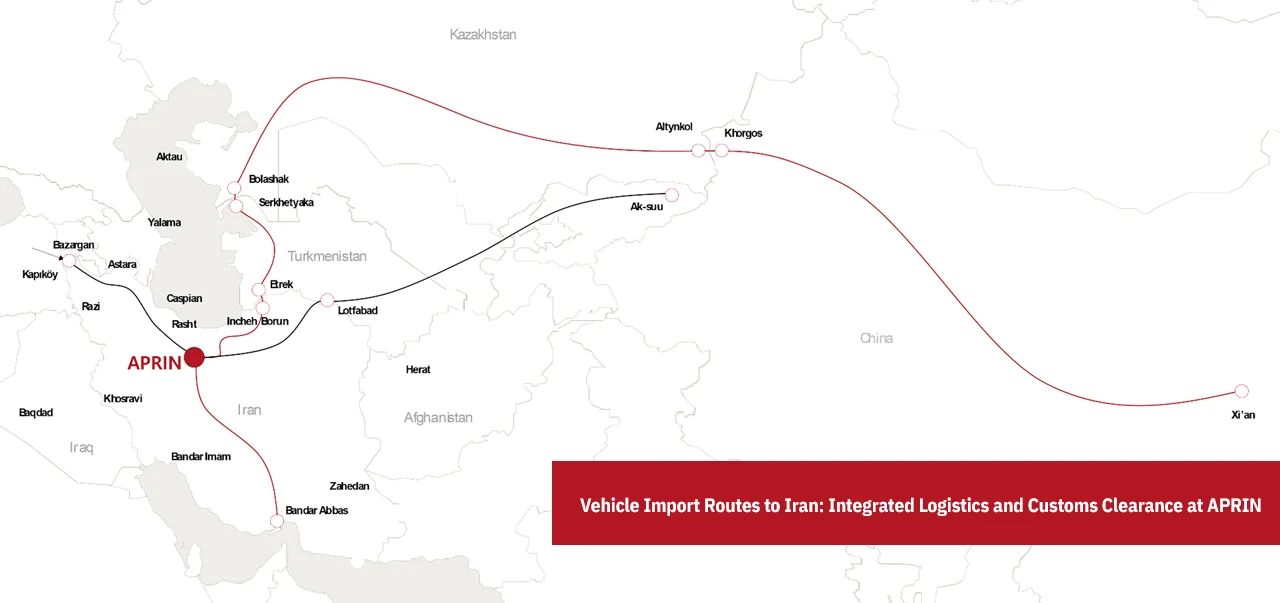
APRIN’s value therefore extends beyond reducing transportation distance. Its main advantage is the ability to consolidate transportation, customs clearance, vehicle storage, inspection, preparation, and distribution within one strategically located logistics hub.
The best car import route to Iran depends on the vehicle’s origin, transport mode, delivery requirements, cost structure, and prevailing operating conditions..
For containerized vehicle imports from China, the China–Central Asia–Iran rail route via Incheh Borun offers a practical alternative to ocean-led supply chains, particularly where transit predictability and direct inland rail access to Tehran are key priorities. For vehicles originating in Türkiye and Europe, dedicated car carrier transport through the Bazargan border provides an effective road-based solution.
By connecting these international routes with on-site customs clearance, dedicated vehicle storage, inspection, preparation, and distribution services, APRIN provides an integrated automotive logistics solution that helps importers reduce handovers, improve operational visibility, and streamline the movement of finished vehicles into Iran’s main consumer markets.
Note: Vehicle registration, import, customs clearance regulations, and the list of authorized customs locations may change in response to new government directives. Importers should therefore review the latest official regulations before purchasing vehicles or selecting a transportation route.



 English