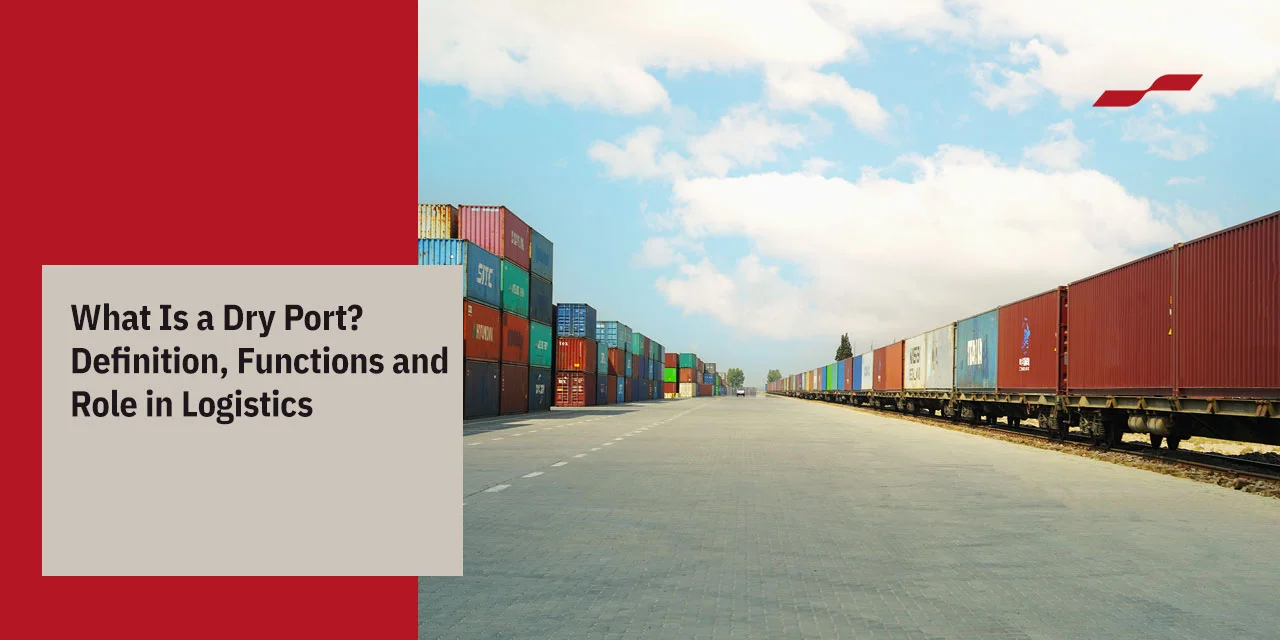
The concept of a port is traditionally associated with the sea, terminals, and vessels. However, in modern logistics networks, many port-related and logistics activities can take place inland, well beyond the coastline. This is where the concept of a Dry Port becomes increasingly important.
A Dry Port is an inland logistics hub connected by rail, road, or other transport modes to seaports, borders, production centers, and inland markets. It brings together a range of transport, customs, cargo handling, and logistics activities within the hinterland, allowing selected operations to be shifted away from congested seaport areas and managed closer to production and consumption centers.
These activities may include cargo handling, container handling and depot services, warehousing, customs clearance and related procedures, cargo inspection, cargo consolidation and deconsolidation, empty container depot services, transshipment, and inland distribution.
Therefore, a Dry Port should not be viewed simply as a rail terminal or a large storage facility. Its broader role is to function as an integrated logistics node connecting transport networks, customs services, production centers, seaports, and inland markets, enabling more efficient cargo flows and better-coordinated supply chains.
According to the Intergovernmental Agreement on Dry Ports, developed under the auspices of the United Nations Economic and Social Commission for Asia and the Pacific (UNESCAP), a Dry Port is defined as an inland logistics centre connected to one or more modes of transport for the handling, storage, and regulatory inspection of goods moving in international trade, as well as the execution of applicable customs controls and formalities.
This definition highlights an important distinction: a Dry Port is not simply a container terminal connected to a seaport.
A modern Dry Port can serve as a strategic node within a broader logistics network, connecting seaports, land borders, rail and road networks, airports, industrial and production centres, and inland markets. The Intergovernmental Agreement on Dry Ports also recognizes transport connections between Dry Ports and other Dry Ports, border crossings, seaports, inland waterway terminals, and airports as part of an integrated intermodal transport network.
The term Dry Port refers to a logistics facility located inland, without direct access to the sea. Unlike a seaport, it does not handle vessels or quayside operations; however, it can perform many of the logistics functions traditionally associated with seaports by facilitating import, export, and transit cargo flows within the hinterland.
For example, an imported container may be discharged at a seaport and transferred by rail to a Dry Port, where subsequent logistics activities such as customs clearance, container stripping, warehousing, and inland distribution can be carried out closer to inland markets.
In the opposite direction, export cargo can be delivered to a Dry Port, where activities such as cargo consolidation, packing, container stuffing, inspection, customs procedures, and preparation for onward transport can be completed before the shipment continues by rail to a seaport or international border.
In academic literature, a Dry Port is commonly described as an inland intermodal terminal with high-capacity transport links to one or more seaports, where customers can deliver and collect standardized transport units, such as containers, in much the same way as at a seaport.
The rapid growth of containerized transport created two major challenges for many seaports: limited space at port terminals and growing congestion on port access routes.
The Dry Port concept gradually evolved as a way to shift selected port and logistics activities from constrained seaport areas to inland locations, supporting more efficient cargo flows between seaports and inland markets.
According to UNESCAP, the original Dry Port concept was based on transferring selected port-related activities inland. In this model, a seaport is directly connected by rail to an inland intermodal terminal, where shippers can deliver and collect cargo units much as they would at a seaport.
As supply chains became more complex and interconnected, the role of the Dry Port expanded. Today, many Dry Ports provide not only transport services, but also an integrated range of services including customs services, warehousing, container handling and depot services, inland distribution, cargo consolidation, and value-added logistics services. UNCTAD similarly recognizes inland terminals as an integral part of freight distribution systems, supporting the integration of maritime gateways with inland markets and logistics activities.
To better understand how an Dry Port operates, its role can be examined across three main cargo flows: imports, exports, and transit. In each case, the Dry Port functions as an inland logistics node, integrating customs, warehousing, cargo handling, and onward transport within a single location.
In the import process, cargo arriving at a seaport can be transferred to a Dry Port by rail or road rather than remaining within the port area for extended periods. Depending on customs requirements and available infrastructure, activities such as container receiving and handling, cargo inspection, customs clearance, container stripping, warehousing, and customs-controlled storage can be carried out at the Dry Port. Once these processes are completed, the cargo can continue to its final destination or enter the inland distribution network.

Through this model, selected logistics activities traditionally performed at the seaport can be shifted inland, closer to production centres, distribution networks, and consumer markets. This can improve cargo flow management, reduce operational pressure on seaports, and support more efficient inland distribution.
In the export process, cargo moves from factories, production facilities, or warehouses to the Dry Port, where a range of export preparation activities can be completed. These may include cargo consolidation, packing, container stuffing, customs procedures, temporary storage, and preparation for onward rail or road transport.

Once the required processes are completed, cargo can be dispatched from the Dry Port to a seaport or land border, or continue onward via an international rail corridor. This allows exporters to manage a significant part of their logistics and customs activities at a single inland location close to production centres, reducing unnecessary transfers and handovers between multiple facilities.
A Dry Port can also play an important role in transit logistics. Cargo entering from one country and destined for another may pass through a Dry Port as part of an international transit movement. At the terminal, cargo can be transferred between transport modes, such as rail and road, while containers may be handled or temporarily stored and the required customs controls and transit formalities are completed.

The cargo can then continue on the next leg of its journey. Dry Ports located along international trade corridors can therefore serve as important nodes for transshipment, intermodal transfer, and connectivity between transport networks, supporting more efficient cargo flows between countries and regions.
According to UNESCAP, the core functions of a Dry Port include cargo handling, storage, regulatory inspection, and customs controls and formalities. Cargo receipt and dispatch, consolidation and distribution, warehousing, and transshipment may also form part of a Dry Port’s broader logistics functions.
A modern, fully developed Dry Port can provide a broad range of services, including:
Academic studies also indicate that a fully developed Dry Port typically provides more than transport services, bringing together capabilities such as warehousing, customs services, Empty Container Depot (ECD) services, container repair, and cargo consolidation within a single inland logistics facility.
The main difference between a seaport and a Dry Port lies in their location and operational role. A seaport is located on the coast and handles vessel calls, quayside operations, and maritime cargo flows. In contrast, a Dry Port is located inland and connects seaports and international gateways with production centres, distribution networks, and inland markets through rail, road, and other inland transport links.
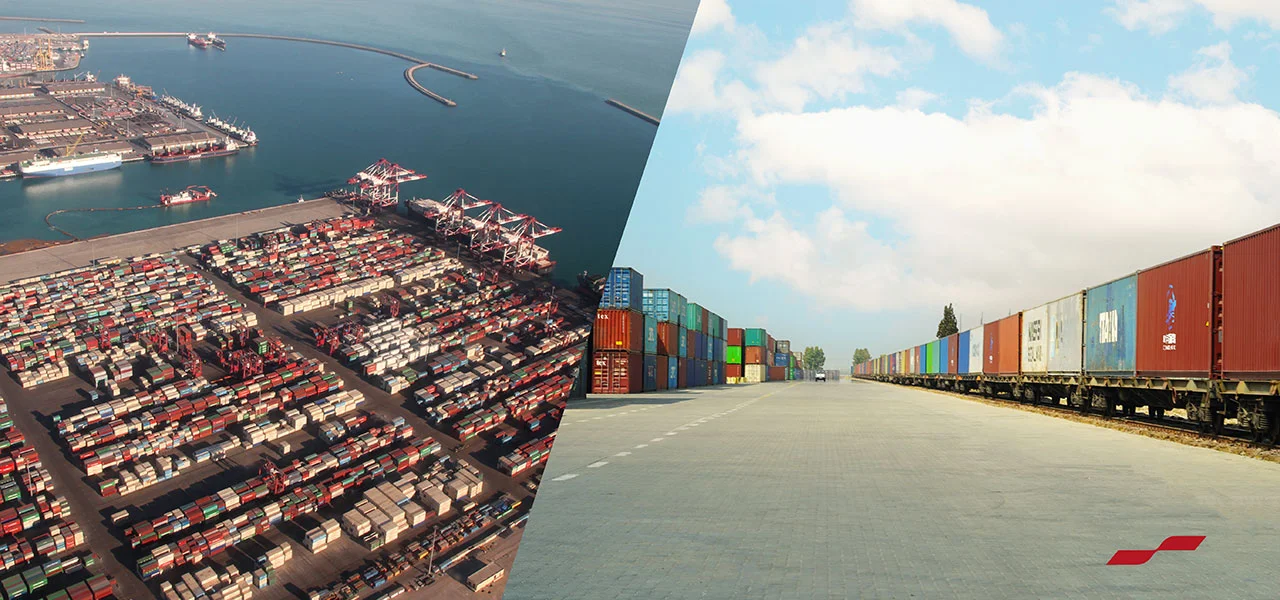
At a seaport, operations are primarily focused on vessel handling, quayside loading and unloading, and the movement of cargo through the maritime gateway. A Dry Port extends selected port and logistics activities into the hinterland, providing services such as rail and road transport, cargo handling, inland distribution, warehousing, customs services, and container handling and depot operations. Therefore, a Dry Port is not a replacement for a seaport; rather, it complements the seaport by extending logistics operations inland and improving connectivity between maritime gateways, production centres, distribution networks, and inland markets.
No. The presence of a warehouse, container yard, or railway station alone does not make a facility a Dry Port. A Dry Port typically combines several key capabilities, including:
Effective connectivity to transport networks, cargo handling capabilities, warehousing facilities, integration with international trade corridors and cargo flows, customs services and regulatory control capabilities, and connectivity with other nodes in the supply chain.
Therefore, there is an important distinction between a conventional transport terminal and an Integrated Logistics Hub operating as a Dry Port.
In logistics terminology, these concepts often overlap and may be used differently across countries and regions. UNESCAP notes that terms such as Dry Port, Inland Container Depot (ICD), and Inland Clearance Depot are sometimes used interchangeably. However, an Inland Container Depot (ICD) generally has a stronger focus on container handling, temporary storage, and associated depot operations.
Dry Port: A broader inland logistics concept that can combine customs services, multimodal transport, warehousing, cargo handling, and connectivity to international trade and transport networks.
Logistics Hub: A broader term that may encompass transport terminals, distribution centres, fulfillment operations, warehousing, logistics-related businesses, and value-added services within a larger logistics cluster.
In practice, a single facility can function simultaneously as a Dry Port, Inland Container Depot, and Integrated Logistics Hub. In modern logistics networks, these functions often overlap depending on the regulatory framework, infrastructure, connectivity, and range of services provided.
One of the most widely used academic classifications groups Dry Ports according to their distance from the seaport into three main categories:
Although the formal definition of a Dry Port does not require rail connectivity, rail freight is a key component of many major Dry Ports worldwide.
A Dry Port is particularly effective when it can handle significant cargo volumes between seaports, border gateways, and inland markets. For regular, high-volume cargo flows, rail freight can provide several operational advantages, including:
One of the key functions of Dry Ports is to facilitate the transfer of cargo between different transport modes, such as:
Sea Freight → Rail Freight → Road Transport or Road Transport → Rail Freight → Sea Freight / International Rail Freight → Dry Port → Domestic Road Transport
Within this structure, a Dry Port is not simply an intermodal transfer point. It can also bring together customs procedures, warehousing, container handling and depot operations, and onward transport planning within a single inland location. UNESCAP therefore recognizes Dry Port development as part of the broader development of an integrated multimodal transport and logistics network.
One of the main reasons for developing Dry Ports is their potential to help optimize Total Logistics Cost (TLC). However, a Dry Port does not automatically guarantee lower logistics costs.
UNCTAD has also noted that the economic benefits of Dry Ports vary according to factors such as transport routes, charges, existing procedures, available facilities, cargo volumes, and local operating conditions. Dry Ports can influence overall logistics costs through several mechanisms:
A comprehensive assessment of a Dry Port’s economic value should therefore consider the full range of logistics costs, including transport, cargo handling, warehousing, customs-related costs, inventory carrying costs, dwell time and delays, and empty container repositioning, rather than focusing solely on the freight rate for a single leg of the journey.
One of the primary objectives of a Dry Port is to shift selected port-related logistics activities from congested seaport areas to inland locations. Rather than keeping containers within seaport yards for extended periods, container flows can be moved inland through high-capacity transport services such as rail. This can free up terminal capacity and allow seaports to focus more effectively on vessel operations, quayside activities, and other core port functions.
Not all types of cargo benefit equally from the Dry Port model. A Dry Port model is generally more effective when:
For this reason, cargo categories such as containerized goods, industrial raw materials, mineral and bulk commodities, finished vehicles and automotive components, consumer goods, agricultural and food products, and other high-volume import and export shipments are often well suited to Dry Port operations.
Developing a large terminal alone does not guarantee the success of a Dry Port. Its performance depends on several key factors:
UNESCAP also highlights the importance of adequate terminal capacity, appropriate terminal design, secure facilities, open and covered storage areas, customs-controlled storage, and suitable equipment for container and cargo handling operations in the development of Dry Ports.
Dry Ports are not limited to serving a single seaport. Within modern logistics networks, they can function as strategic inland nodes along international trade and transport corridors, connecting border gateways, seaports, rail networks, industrial centers, and domestic markets.
UNCTAD, in Review of Maritime Transport 2024, also highlights the role of Dry Ports as supporting infrastructure for supply chains along domestic and international economic corridors, combining road and rail connectivity with customs services, warehousing, cargo consolidation, and distribution.
APRIN Dry Port is located in Islamshahr, southwest of Tehran, and is connected to Iran’s national railway network. Its strategic location near major industrial and commercial centers and Iran’s largest consumer market enables APRIN to link international cargo flows with the domestic market.
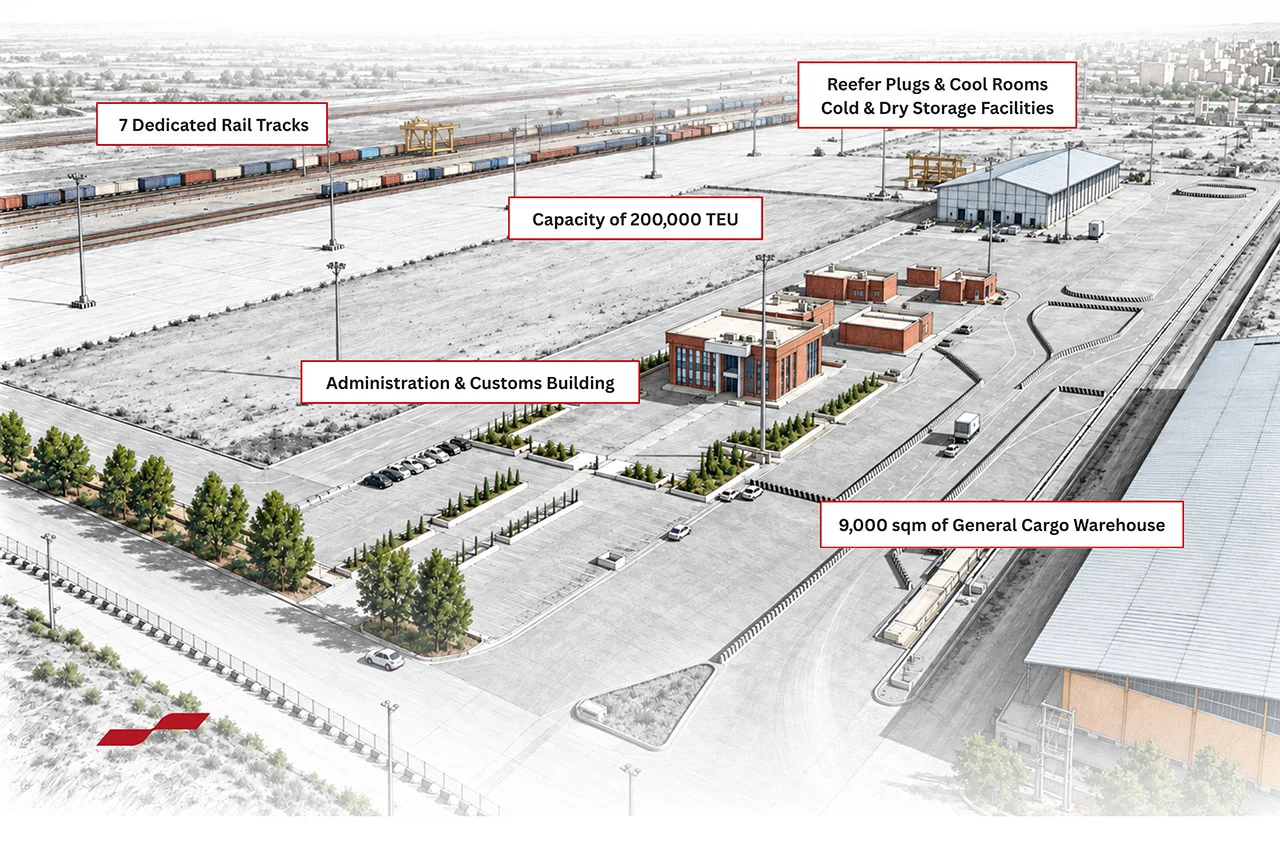
APRIN is more than a rail terminal. As an Integrated Logistics Hub, it brings together integrated logistics infrastructure and services within a single location, including:
The current structure of APRIN’s services integrates transport, warehousing, customs operations, and cargo handling within a single Integrated Logistics Hub. APRIN is connected through Iran’s national railway network to Shahid Rajaee Port in Bandar Abbas and provides access to major domestic and international transport routes. It also supports cargo flows along key international corridors, including the International North–South Transport Corridor (INSTC), Southern Silk Road, TRACECA, and ECO Corridors.
It is this combination of infrastructure, connectivity, and integrated services that extends the role of a Dry Port beyond a simple cargo transfer point and enables it to function as an important inland node within Iran’s national logistics network.
Dry Ports around the world vary significantly in terms of geographical location, transport connectivity, operational scale, and their role within global supply chains and trade networks. Comparing these facilities solely by container capacity does not provide a complete picture of their strategic importance, as operators may report different metrics, including annual design capacity, terminal handling capacity, transshipment capacity, or actual throughput. Nevertheless, several Dry Ports and Inland Container Depots stand out due to their strategic location, strong rail connectivity, position along major international trade corridors, and significant container handling volumes.
| Dry Port / Inland Terminal | Location | Reported Container Capacity | Primary Logistics Role |
|---|---|---|---|
| Khorgos Gateway Dry Port | Kazakhstan–China border | 800,000 TEU per year | Rail gateway linking China with Central Asia and Europe |
| ICD Dadri | Greater Noida, India | 1,000,000 TEU per year | Multimodal inland hub linking northern India with major seaports |
| Cikarang Dry Port | Bekasi, Indonesia | 400,000 TEU per year | Inland logistics gateway connecting the Cikarang industrial cluster with Tanjung Priok Port |
| Nairobi Inland Container Depot | Nairobi, Kenya | More than 450,000 TEU per year | Rail-connected inland terminal linking Mombasa Port with Kenya’s hinterland |
| Madrid–Coslada Dry Port | Madrid, Spain | 220,000 TEU per year | Rail-connected inland terminal linking central Spain with seaports |
| DP World Kigali | Kigali, Rwanda | 50,000 TEU per year | Inland logistics gateway connecting landlocked Rwanda with East African seaports |
The performance of a Dry Port is not determined by terminal size or container throughput alone. Major Dry Ports typically share several characteristics, including location along key trade corridors, strong rail connectivity, proximity to production centers and major consumer markets, access to customs services, on-site container handling and warehousing, and regular transport links to seaports or international border gateways.
For example, Khorgos Gateway Dry Port serves as a strategic rail interchange between China and Central Asia; Cikarang Dry Port extends port and logistics services into one of Indonesia’s major industrial areas; Nairobi Inland Container Depot strengthens the inland connection between Mombasa Port and Kenya’s domestic market; and DP World Kigali provides landlocked Rwanda with an inland logistics gateway to East African seaports.
These examples demonstrate that the role of a Dry Port extends well beyond container storage. A modern Dry Port functions as an integrated logistics node connecting transport networks, customs services, warehousing, rail infrastructure, and inland markets.
The future development of Dry Ports will increasingly depend on their ability to support digitally integrated and well-connected trade and transport networks. As international trade patterns evolve and supply chains require greater flexibility, Dry Ports are expected to develop beyond conventional inland terminals into strategic inland nodes within integrated logistics networks.
Technology will play an increasingly important role in this development. Digitalization of transport and customs documentation, data exchange between customs authorities, rail operators, transport providers, and shippers, cargo tracking and operational visibility, and digital terminal and capacity management can improve coordination and reduce processing and decision-making time across the supply chain. At the same time, the expansion of rail corridors and stronger interconnections between Dry Ports can further strengthen their role in regional trade and cross-border transport.
As a result, the competitiveness of future Dry Ports will not depend solely on terminal size or container handling capacity. Instead, factors such as the quality of connectivity to international corridors, the level of data integration and operational visibility, multimodal integration, and the ability to adapt to changing trade routes and cargo flows will increasingly shape their role within regional and global logistics networks.
In simple terms, the answer to the question "What is a Dry Port?" is:
A Dry Port is an inland logistics center connected to seaports, border gateways, and markets through transport networks, providing services such as cargo and container handling, customs services, warehousing, multimodal transport, and inland distribution.
However, the true value of a Dry Port lies not only in its physical infrastructure, but also in its ability to connect transport modes, trade gateways, and inland markets within an integrated logistics network.
Within this framework, APRIN Dry Port, strategically located southwest of Tehran and connected to Iran’s national railway network, provides an inland gateway between major industrial and consumer markets and international trade routes. APRIN supports cargo flows along East–West routes and the Southern Silk Road, while also providing access to routes associated with the International North–South Transport Corridor (INSTC). This connectivity positions APRIN to support trade flows linking Iran with the Persian Gulf, Central Asia, China, Russia, the Caucasus, Türkiye, Europe, and other regional markets.
This strategic position is supported by APRIN’s operational infrastructure, including seven dedicated operational rail tracks, capacity to handle up to 30 trains and approximately 1,000 rail wagons per day, and annual container handling capacity of around 200,000 TEU. These capabilities are complemented by on-site customs facilities, general cargo warehousing, a 2,600-square-meter cold storage facility, 120 reefer plugs, an Empty Container Depot (ECD), container handling, stuffing and stripping services, container repair and cleaning, and rail and road transport services.
The combination of these capabilities enables APRIN to operate beyond the role of a rail terminal or container storage facility. As an Integrated Logistics Hub, it can integrate key activities related to import, export, transit, customs, warehousing, cargo handling, and distribution within a single location. APRIN’s strategic role lies in its ability to connect international trade corridors with Iran’s domestic market and link the national railway network with regional and international cargo flows — a function that reflects the core role of a modern Dry Port.



 English