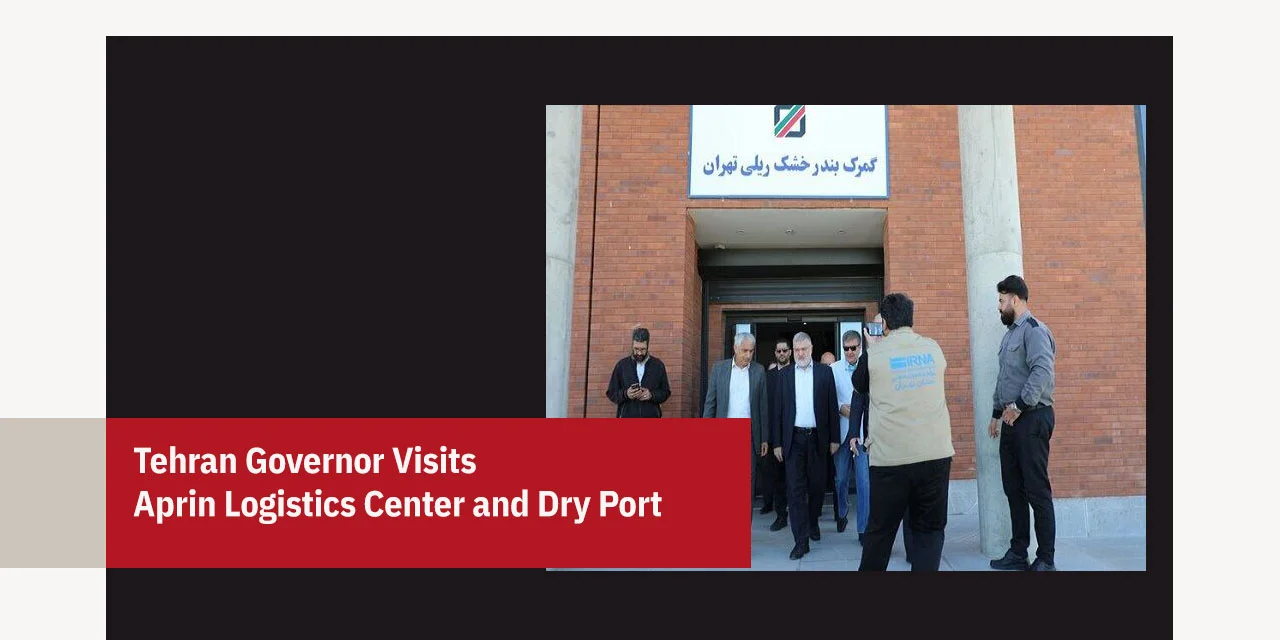
According to the Public Relations Office of the Islamic Republic of Iran Railways (RAI), as part of ongoing efforts to advance rail transportation infrastructure in Tehran Province, Mohammad Sadegh Motamedian, Governor of Tehran, accompanied by a delegation of provincial officials, visited the APRIN Advanced Logistics Center and its rail-connected dry port.
The visit was attended by the Governor’s deputies, the Director General of Tehran Railways, the Director General of Industry, Mine and Trade of Tehran Province, the Governor of Eslamshahr, and other provincial authorities. The purpose of the visit was to evaluate the operational capabilities of this strategic logistics hub and review the challenges affecting its future development.
During the tour, the Governor of Tehran expressed satisfaction with the facilities, infrastructure, and operational capacities available at APRIN. He emphasized the importance of accelerating efforts to address existing challenges and remove barriers to the further expansion of rail transportation services through the center.
During the meeting, Yousef Garanpasha presented an overview of the development plans being pursued by the General Directorate of Tehran Railways. He reaffirmed the organization’s full readiness to cooperate with the Governor’s Office and other relevant institutions to achieve the province’s transportation and logistics development objectives.
Referring to the critical role of rail transportation in reducing traffic congestion, air pollution, and logistics costs, the Governor described the optimal utilization of APRIN’s capabilities as a strategic priority for Tehran Province.
The meeting also included discussions on attracting investment in the rail freight sector and encouraging logistics operators and investors to take advantage of the opportunities and incentives offered by APRIN Dry Port.
As Iran’s largest inland logistics hub, APRIN Dry Port continues to play a growing role in strengthening rail freight transportation, improving supply chain efficiency, and supporting the development of regional and international trade corridors.
Source: Mrud News



 English