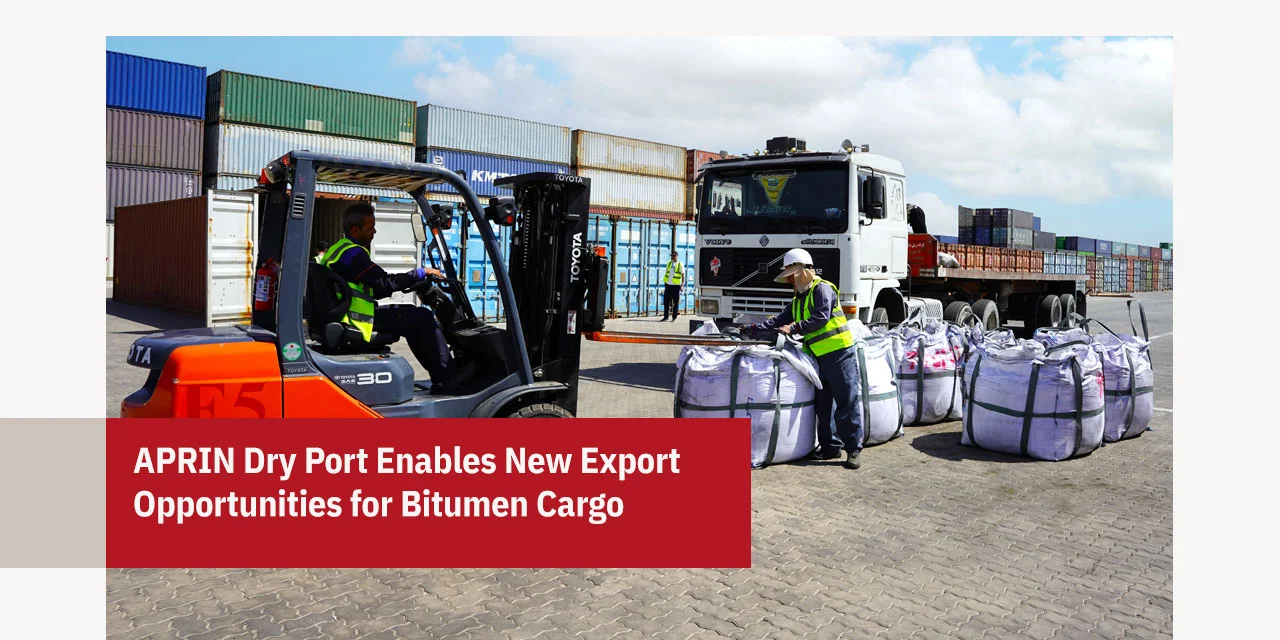
Rail export operations for Iranian bitumen products have commenced through APRIN Dry Port, utilizing its terminal infrastructure, container handling capabilities, and rail connectivity. This new route enables exporters to utilize APRIN’s terminal infrastructure, container handling capabilities, and rail connectivity, providing expanded inland and rail transportation options for moving Iranian bitumen products to regional and international markets.
Bitumen is one of Iran’s key export commodities, widely used across industries including road construction, infrastructure development, waterproofing, building projects, and industrial applications. With significant oil resources and strong production capacity in hydrocarbon derivatives, Iran is recognized as a key supplier of various bitumen products in international markets.
In international bitumen trade, factors beyond product specifications and grades play a critical role in designing an efficient export supply chain. These include HS Code classification, customs procedures, packaging requirements, cargo handling operations, container stuffing, and transport mode selection. As certain maritime routes face increasing constraints and uncertainty, rail freight is increasingly being considered as an alternative transport solution for high-volume and containerized cargo movements.
Following recent coordination with West Tehran Customs Office, direct export of Natural Bitumen / Natural Asphalt through APRIN Dry Port is currently available for products classified under HS Code 271490.
This category includes products such as Gilsonite, Natural Bitumen, and Asphaltite, which are eligible for direct export through APRIN, subject to applicable customs requirements. Exporters can complete the required customs procedures and utilize APRIN’s rail-connected infrastructure to connect their cargo to international markets.
This development enables more direct utilization of APRIN’s customs and logistics capabilities for a segment of Iran’s bitumen exports and can create a new logistics pathway connecting exporters with markets across Central Asia, China, and other destinations linked through regional rail networks.
For other bitumen categories, including Petroleum Bitumen under HS Code 271320 and bituminous products and mixtures classified under HS Code 271500, APRIN provides transshipment and terminal handling solutions for these cargo flows.
Under this model, export declarations and customs procedures are completed at the authorized customs location, after which cargo is transferred to APRIN Dry Port for subsequent logistics operations. Depending on cargo requirements and operational conditions, APRIN can support services including cargo handling, yard movements, container stuffing, storage, and rail preparation.
The operational process for these cargo categories can be structured as follows:
Completion of export declaration and customs procedures → Transfer of cargo to APRIN → Cargo handling and container stuffing → Cargo preparation → Dispatch through the rail network to international destinations
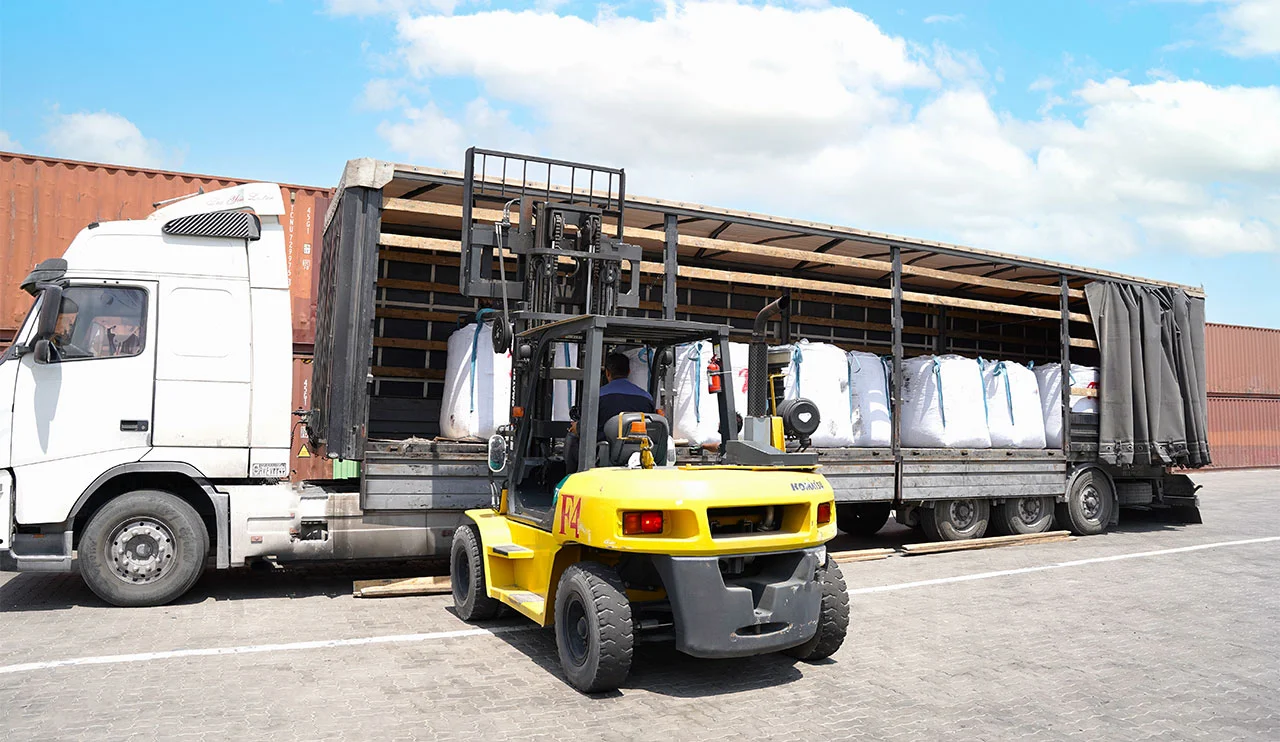
Through this model, even when export declarations are not completed directly at APRIN, exporters can continue to benefit from APRIN Dry Port’s terminal, container handling, and rail connectivity capabilities as part of their extended logistics chain.
Bitumen is typically traded and transported in large volumes, making transportation costs a significant component of the overall export cost structure. In such cargo flows, selecting the appropriate route and transport mode can directly influence the competitiveness of products in destination markets.
For suitable cargo volumes and long-distance routes, rail freight can reduce reliance on long-distance road transportation, enable the movement of larger cargo volumes, and improve exporters’ access to international land-based and rail trade corridors.
Furthermore, as certain maritime routes experience operational constraints, increased costs, or reduced predictability, expanding rail-based solutions can provide greater flexibility in designing resilient export supply chains.
China is one of the key destination markets for Iranian export products, with continued demand for bitumen products. The development of rail routes connecting Iran, Central Asia, and China provides exporters with additional transportation options, allowing rail freight to be considered alongside other transport modes, particularly in response to challenges affecting maritime logistics.
Within this logistics structure, APRIN Dry Port can serve as a strategic connection point between cargo flows and the rail network, particularly for shipments that are suitable for rail transportation in terms of volume, packaging, container configuration, and final destination.
As an Integrated Logistics Hub connected to Iran’s national railway network, APRIN Dry Port brings together the logistics capabilities required to support export supply chains in one location. By integrating customs procedures at authorized customs facilities, cargo transfer to APRIN, terminal handling, container operations, stuffing, storage, and rail transportation, APRIN provides an integrated logistics environment for exporters seeking efficient and reliable alternative routes for bitumen cargo.
The utilization of APRIN’s capabilities for bitumen exports can support the development of alternative export routes for Iranian products and strengthen the role of rail freight in connecting domestic producers and exporters with regional and international markets.
Currently, Natural Bitumen and Natural Asphalt under HS Code 271490 are eligible for direct export through APRIN, while other bitumen products can utilize APRIN’s transshipment, terminal operations, and rail freight services in accordance with applicable customs regulations.
Note: Customs regulations and approval requirements may change based on updated directives and policies. Exporters should verify the latest customs status, HS Code classification, and cargo acceptance requirements before planning and dispatching shipments.



 English