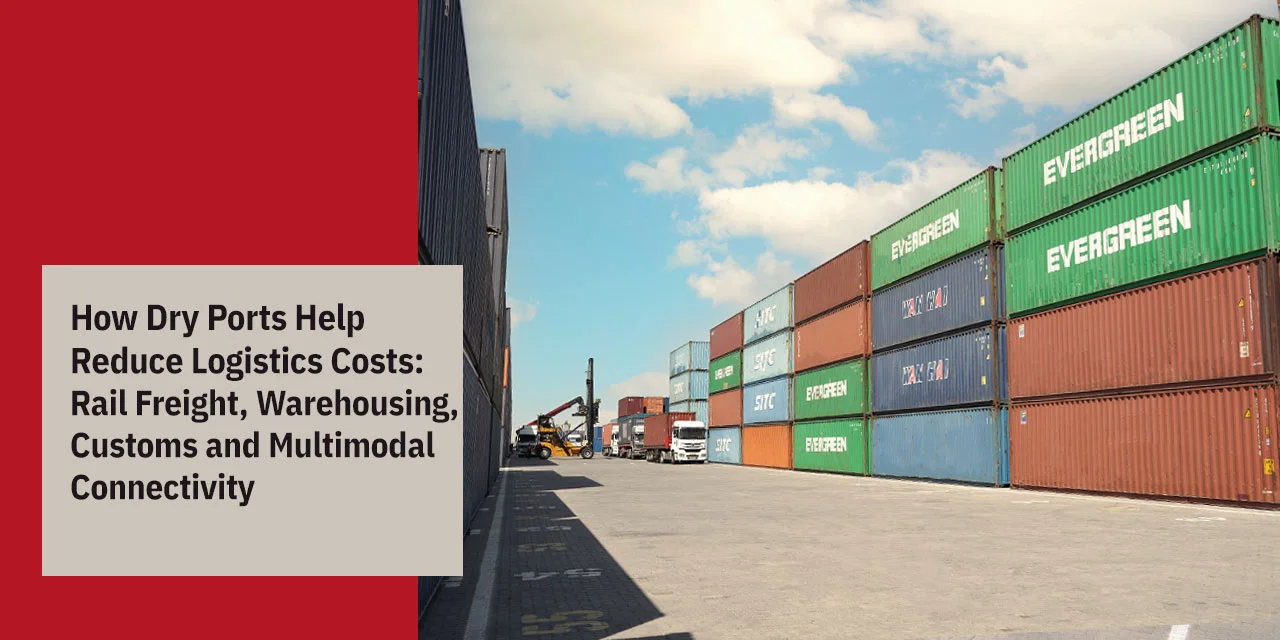
Logistics costs extend far beyond freight rates. Every shipment moving from origin to destination incurs a range of direct and indirect costs, including transportation, loading and unloading, port dwell time, warehousing, customs procedures, empty container repositioning, inventory carrying costs, delays, and delivery uncertainty. As a result, optimizing logistics costs is not simply about selecting the lowest-cost transport mode; it is about designing and optimizing the logistics network as a whole.
In this context, a Dry Port is an infrastructure solution that can shift part of port and logistics operations from seaports to inland locations. By integrating rail and road transport, customs services, warehousing, container handling, and distribution, a dry port can contribute to lower total logistics costs.
The importance of this model becomes clearer when considering that, according to UNCTAD, around 80% of international merchandise trade by volume is transported by sea. Efficient connections between seaports and inland transport networks therefore have a direct impact on the overall cost of trade.
The United Nations Economic and Social Commission for Asia and the Pacific (UNESCAP) considers the development of Dry Ports an important component of an integrated international intermodal transport and logistics system. The Intergovernmental Agreement on Dry Ports was also established to support the development of an international network of Dry Ports across Asia.
From an operational perspective, a Dry Port can be described as an inland logistics hub connected to seaports through rail and/or road networks and capable of providing services such as container handling, warehousing, customs procedures, cargo consolidation and deconsolidation, and inland cargo distribution.
The economic rationale behind a Dry Port is straightforward. Instead of moving large volumes of cargo individually by truck from a seaport to multiple inland destinations, cargo can be consolidated and transferred to an inland hub, where subsequent logistics activities can be managed closer to industrial centers and consumer markets.
However, a Dry Port does not automatically guarantee lower logistics costs. Its economic value depends on factors such as distance from the seaport, cargo volume, rail share, train capacity, terminal handling costs, tariffs, and the hub’s location relative to production and consumption centers.
To properly assess the role of a Dry Port, logistics costs should be evaluated through the broader concept of Total Logistics Cost rather than freight rates alone.
Total Logistics Cost = Transportation + Cargo Handling + Warehousing + Customs + Inventory Carrying Costs + Delays + Empty Container Repositioning + Administrative and Operational Costs
A route may appear attractive because of a lower freight rate, yet still result in higher overall logistics costs due to extended dwell time, additional handling, unnecessary storage, or delays in customs clearance.
UNCTAD data further illustrates the importance of this issue. Based on the organization’s trade and transport data for the period from 2016 to 2021, average maritime transport costs represented approximately 8.1% of the FOB value of goods in developed economies, compared with 10.6% in developing economies. In least developed countries, the average reached approximately 13.7% of FOB value.
These figures highlight that the quality of transport and logistics infrastructure is an important economic factor in trade competitiveness. Transport infrastructure quality, operational scale, the number of cargo handovers, and trade imbalances are among the factors that influence transport costs.
One of the most important cost advantages of a Dry Port is its ability to support cargo consolidation and high-volume rail transportation.
Road freight offers considerable flexibility and remains essential for short-distance movements, regional distribution, and final delivery. For long-distance movements and high-volume cargo, however, rail can benefit from economies of scale. Instead of transporting individual containers by truck from a seaport to inland markets, containers can be consolidated and transported by rail to a Dry Port, where they can then be distributed based on their final destinations.
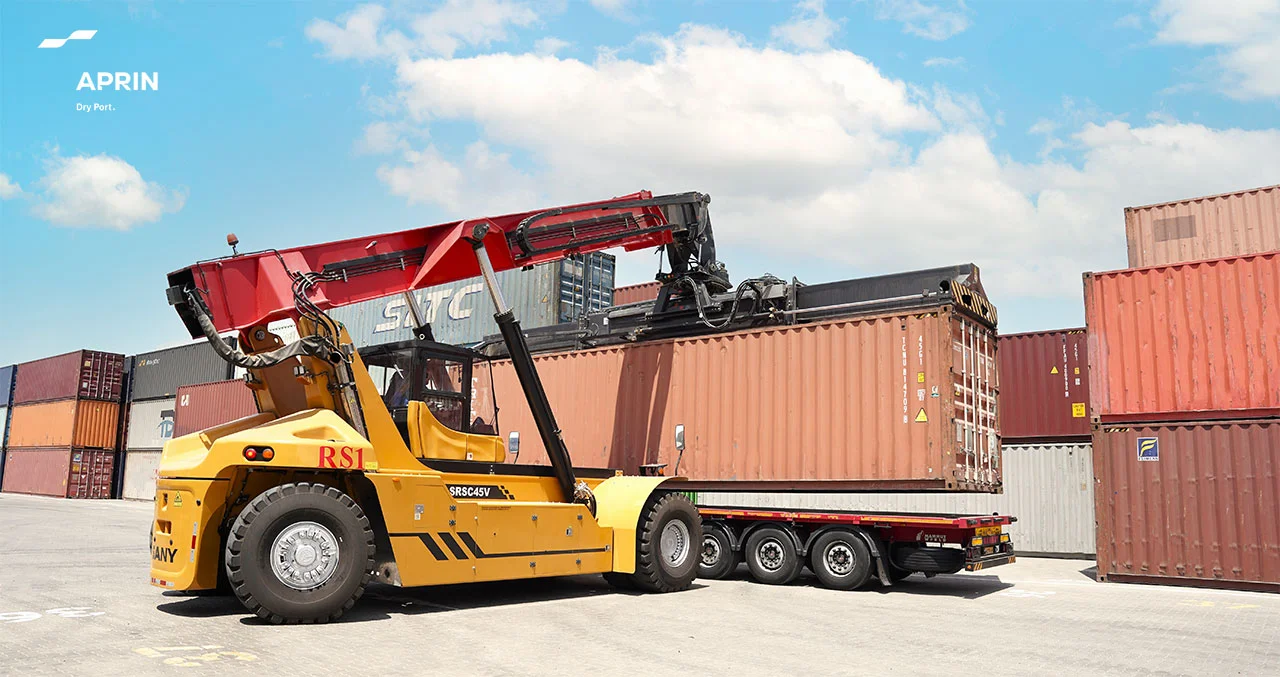
An academic study on Dry Port network design in Northeast China found that, under an optimized road–rail intermodal model, 82.76% of container volumes could be handled through the combined mode, resulting in an approximately 21.67% reduction in total transport costs. However, this figure reflects the conditions of that specific study and should not be treated as a universal cost-saving benchmark for all Dry Ports.
This highlights an important principle: the level of cost savings generated by a Dry Port depends on the network structure, distance, cargo volume, tariffs, and operating conditions.
Every transfer of cargo between a seaport, warehouse, customs facility, terminal, and distribution center can generate additional costs.
These costs are not limited to truck transportation and may include:
A Dry Port creates greater economic value when multiple logistics activities can be consolidated within one Integrated Logistics Hub.
For example, if loading and unloading, warehousing, customs procedures, inspection, container handling and onward transport planning are coordinated within a single facility, the number of cargo handovers between different locations can be reduced.
In addition to reducing certain direct costs, this approach can also simplify the operational complexity of the supply chain.
One of the core functions of Dry Ports is to move part of the customs process from seaports to inland locations.
Studies on Dry Port development indicate that, in some developing economies, reducing the time and cost associated with port-side delays and customs procedures has been an important driver for the development of inland logistics facilities. From an economic perspective, this model can allow containers to move from a seaport to an inland logistics center, where inspection, assessment, warehousing, and customs clearance can be carried out closer to industrial and consumer markets.
The potential outcomes include lower operational congestion at seaports, reduced dwell time, and customs clearance closer to the cargo’s final market.
Land within seaport areas is limited and valuable. Seaports are primarily designed for vessel loading and unloading, container terminal operations, and the rapid transfer of cargo to the hinterland, rather than long-term cargo storage.
A Dry Port can shift part of the storage and inventory management function inland.
Under this model, containers can be moved out of the seaport more quickly and stored at a Dry Port when required. This can contribute to lower port dwell time, improved terminal capacity utilization, reduced congestion, and more efficient use of seaport infrastructure.
Academic research also identifies the reduction of seaport congestion and the improvement of inland transport performance as important objectives of Dry Port development.
One of the less visible costs in container logistics is Empty Container Repositioning. Imbalances between import and export flows can result in empty containers accumulating in one location while the same equipment is required elsewhere.
An Empty Container Depot (ECD) at a Dry Port can support the storage, inventory management, and reuse of empty containers closer to cargo owners.
A study published in Transportation Research Part D, based on more than 176,000 container-flow records collected over a three-year period from 2019 to 2021, examined the role of Dry Ports in improving the economic and environmental efficiency of empty container movements. The results showed improved system performance under Dry Port and long-distance rail transport scenarios.
The findings indicate that empty container management can be an important element of Dry Port economics rather than simply an ancillary service.
One of the most significant hidden costs in logistics is the cost of time. Consider an importer holding goods worth US$10 million. If the company’s annual cost of capital is 20%, just 10 additional days of delay would represent approximately:
10,000,000 × 20% × 10 ÷ 365 ≈ US$54,800
This example illustrates why customs clearance time and transport predictability are particularly important for high-value cargo.
A Dry Port therefore contributes to logistics cost efficiency only when it can also reduce dwell time and delay-related risks across the supply chain.
In supply chain management, predictability can sometimes be more valuable than absolute speed. When companies can reliably anticipate when cargo will arrive at a warehouse, they can manage inventory, production schedules, and storage capacity more effectively.
In a traditional logistics chain, cargo owners may need to coordinate with several independent service providers:
Transport Provider → Seaport → Trucking Company → Customs → Warehouse → Inspection Company → Second Transport Provider → Distribution Center
Each connection between these stages requires coordination, documentation, time, and operational control.
Within an Integrated Logistics Hub, a number of these activities can be consolidated in one location:
Rail Transport + Road Transport + Customs + Warehousing + Container Handling + Inspection + Value-Added Services + Distribution
This level of integration can reduce supply chain friction costs—costs that are not always reflected in freight rates but can have a significant impact on the final logistics cost.
Transport economics are strongly influenced by operational scale. The greater the volume that can be consolidated onto a single transport corridor, the more efficiently rail, truck, and terminal capacity can be utilized.
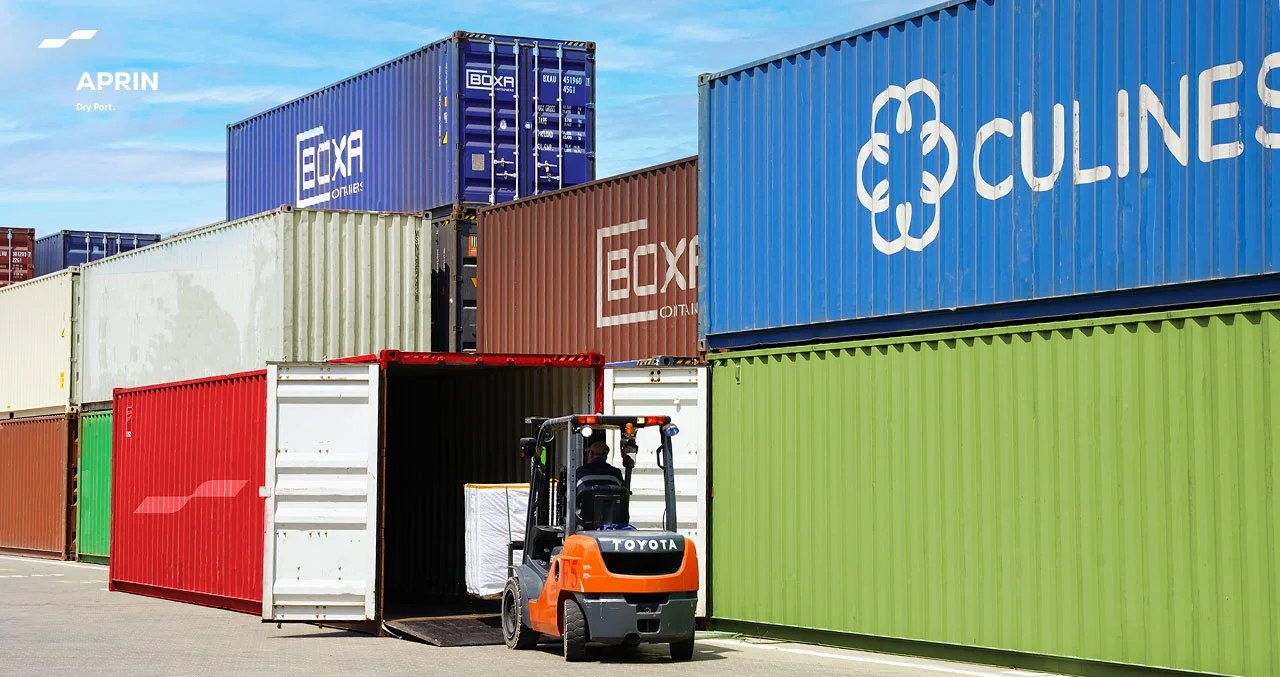
By consolidating cargo from multiple importers and exporters, a Dry Port can support greater use of:
This becomes particularly important on corridors with balanced two-way cargo flows. When trains operate with cargo in both directions, the economics of the route can be significantly better than when equipment or railcars return empty.
Logistics costs cannot be assessed only under normal operating conditions. Supply chain resilience also has significant economic value.
The UNCTAD Review of Maritime Transport 2024 highlighted how disruptions in the Red Sea, Suez Canal, and Panama Canal contributed to higher and more volatile freight rates. By mid-2024, the Shanghai Containerized Freight Index had more than doubled compared with its level at the end of 2023.
UNCTAD has also emphasized the importance of efficient and flexible transport infrastructure in reducing the impact of disruptions on transport costs. In this context, connecting a Dry Port to rail and road networks can provide more options for selecting and designing alternative transport routes.
This is the concept of Modal Flexibility: when a particular route or transport mode is disrupted, cargo owners have more alternatives for maintaining the movement of goods.
In modern logistics, reducing logistics costs is not limited to direct financial expenses. Energy consumption, greenhouse gas emissions, road congestion, and infrastructure wear can also form part of the broader cost of the transport system.
Academic studies on Dry Ports indicate that shifting part of inland transport from road to road–rail intermodal transport can reduce certain emissions. For example, a study of container transport in Türkiye used simulation modeling to examine and confirm the environmental benefits associated with Dry Port utilization and intermodal rail transport.
However, more recent research indicates that simply shifting cargo to rail does not automatically produce the lowest possible emissions. Energy sources, train efficiency, transport distance, and network design also play an important role. A 2023 study found that, under its specific model, optimizing for minimum emissions could reduce emissions by up to 13.23% compared with a cost-only optimization scenario.
Dry Port planning should therefore consider transport economics, capacity, distance, and environmental impacts together.
The strategic position of APRIN Dry Port provides a strong foundation for optimizing cargo flows and managing inland logistics more efficiently. Located southwest of Tehran and close to one of Iran’s largest concentrations of industrial, commercial, and consumer activity, APRIN has access to Iran’s national railway network and key road corridors, providing connectivity to major markets and logistics gateways across the country.
APRIN has an annual operational capacity of approximately 200,000 TEU and infrastructure designed to accommodate significant rail freight volumes. The facility also brings together rail and road transportation, container handling, warehousing, customs services, and other logistics activities within an Integrated Logistics Hub.
APRIN’s operational advantages can influence total logistics costs in several ways:
| Factor | Cost-Saving Mechanism |
|---|---|
| Rail Freight | Consolidation of high-volume cargo and reduced reliance on long-distance road freight |
| Proximity to Tehran | Shorter distance between logistics operations and a major share of Iran’s industrial and consumer market |
| On-Site Customs | Customs procedures and clearance within an Integrated Logistics Hub |
| Warehousing | Storage closer to the market and more flexible, phased distribution planning |
| Container Handling | Fewer fragmented cargo movements between multiple facilities |
| ECD | Improved empty-container management and reduced unnecessary equipment repositioning |
| Multimodal Transport | Flexible combination of rail and road according to route, cargo volume, and destination |
| Domestic Distribution | Efficient inland distribution from the hub to industrial, commercial, and consumer markets |
A fundamental consideration when evaluating the economics of a Dry Port is that moving cargo from a seaport to a Dry Port introduces an additional operational stage. Therefore, the right question is not:
“Does a Dry Port add cost?”
The more relevant question is:
“Is the additional cost of moving and handling cargo through the Dry Port lower than the costs eliminated or reduced elsewhere in the supply chain?”
To answer this question, the total cost of two different logistics scenarios should be compared:
Scenario 1:
Seaport → Direct Road Freight → Warehouse or Customs Facility → Final Destination
Scenario 2:
Seaport → Consolidated Rail Freight → Dry Port → Customs and Warehousing → Final Distribution
If the savings generated through long-distance transport, reduced dwell time, warehousing, empty-container management, faster cargo processing, and fewer unnecessary movements exceed the costs associated with Dry Port transfer and handling, Total Logistics Cost can be reduced.
This is why academic studies generally rely on whole-network modeling rather than applying a single fixed percentage as the standard “Dry Port saving.” The Northeast China study reporting an approximately 21.67% reduction in transport costs, for example, was based on a specific model incorporating construction and operating costs, transportation, time, and environmental factors.
The economic benefits of a Dry Port are not the same for every cargo type. The greatest potential for cost efficiency generally exists when one or more of the following conditions apply:
For these reasons, containerized cargo, industrial raw materials, bulk cargo, mining products, automotive parts and vehicles, consumer goods, and high-volume import and export shipments can be among the cargo categories best suited to a Dry Port model.
The most important shift in logistics decision-making is to avoid evaluating transport solutions solely on the basis of Freight Rate.
A supply chain manager should consider at least five variables at the same time:
Transportation Cost + Handling Cost + Inventory Cost + Time Cost + Risk Cost
Rail freight may appear highly attractive on the basis of the direct freight rate, yet limited service frequency can increase inventory requirements. In another corridor, road freight may have a higher unit cost but still represent the most economical option for time-sensitive cargo.
Therefore, the lowest freight rate does not necessarily mean the lowest logistics cost.
The role of an efficient Dry Port is precisely to provide greater choice and coordination across rail, road, customs, warehousing, cargo handling, and distribution so that the overall cost of moving goods can be optimized.
Dry Ports are not simply “ports without a coastline.” In modern supply chain architecture, they function as inland nodes within integrated trade and intermodal transport networks.
Academic research indicates that, under the right operating conditions, a Dry Port can contribute to lower Total Logistics Cost through shifting long-distance freight from road to rail, cargo consolidation, reducing unnecessary cargo movements, improving empty-container management, moving selected customs and warehousing activities inland, and reducing delays and variability across the supply chain.
For APRIN Dry Port, the combination of a strategic location near Tehran, access to the national railway network, road connectivity, customs services, warehousing, and container handling infrastructure creates the potential to consolidate a significant portion of import, export, and domestic distribution activities within one Integrated Logistics Hub.
Ultimately, the economic value of a Dry Port should not be measured solely by comparing the freight rate of a single container. The more meaningful metric is Total Logistics Cost: how much it costs to move cargo from origin to the final market, how long the process takes, how many handovers are involved, and how predictable the overall logistics flow is.



 English