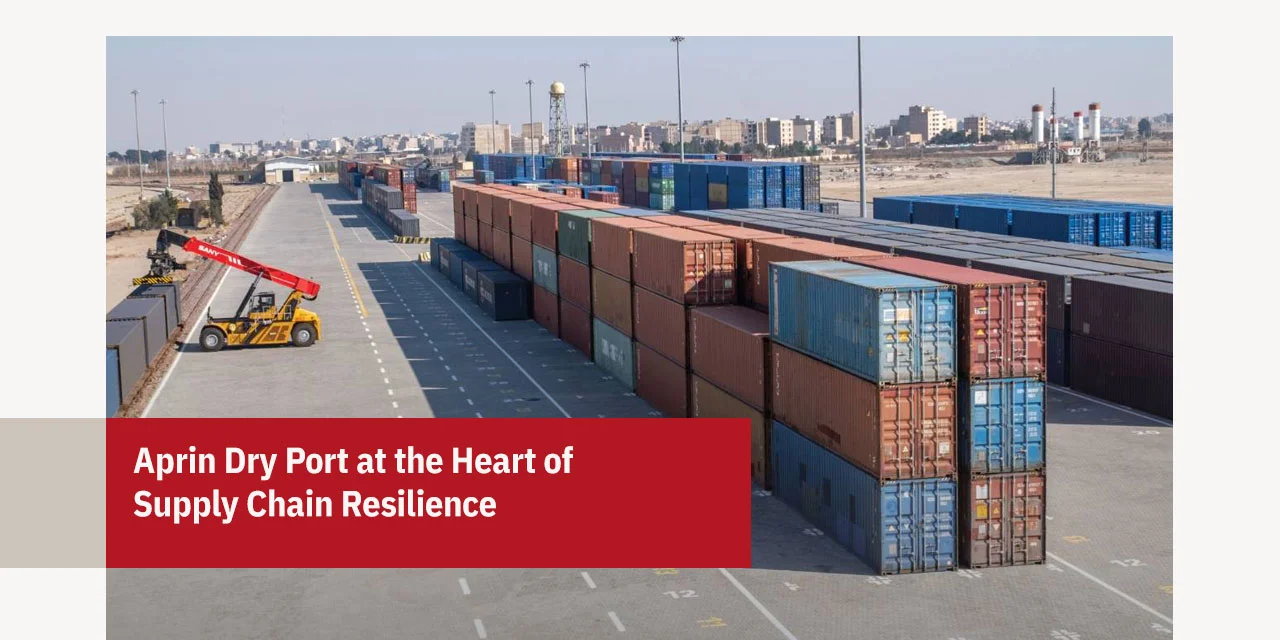
During the recent critical period, APRIN Dry Port (ADP) played a key role in supporting the continuity of essential supply chains by serving as the inland destination for approximately 700 containers of rice transferred from Bandar Abbas.
Following the decision to facilitate the movement of essential goods, the cargo was transported by rail, helping reduce pressure on port operations and ensure supply to the Tehran metropolitan area.
With the valuable support of RAI and the customs authorities at both origin and destination, ADP successfully received, handled, and facilitated the clearance of the cargo, demonstrating the importance of inland logistics infrastructure and effective cooperation between customs authorities, railway operators, terminal operators, and logistics service providers during critical times.
This operation demonstrated how inland dry ports can contribute to national supply chain resilience when continuity matters most. More importantly, it reinforced our belief that the future of sustainable and efficient logistics networks lies in the development of inland dry ports, creating capacity beyond traditional seaports.
The future is not only at the ports — the future is with dry ports.



 English